Why Luxury Brands Are Opening Cafés: The Hidden Retail Strategy Behind Hospitality
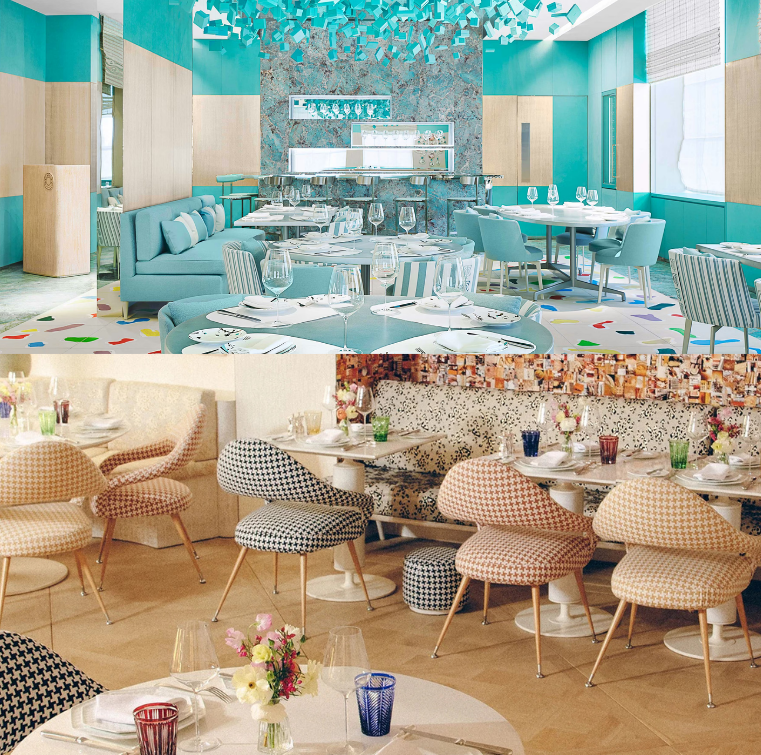
Image courtesy of Tiffany & Co. and Dior.
Audrey Hepburn drinking coffee and eating a croissant while standing across from the Tiffany store, wishing she could afford all the diamonds and jewelry.
That scene from Breakfast at Tiffany’s became one of the most iconic scenes ever created.
Millions of girls are related to that moment. And millions recreated that same scene on social media.
To make that fantasy real, Tiffany opened the Blue Box Café at its Fifth Avenue flagship in 2017, where anyone can walk in, order breakfast, and experience Tiffany’s world firsthand.
Since then, “Breakfast at Tiffany’s” has stopped being just a movie scene. It became something you can live.
The same girl who may save for years to finally buy her first Tiffany bracelet can now enter the Blue Box Café and experience what it feels like to be a Tiffany customer before becoming one.
Many reviews revealed that visitors felt an emotional shift. They weren’t just having coffee. They felt part of something they had only imagined before.
But Tiffany was not the first luxury brand to do this.
Gucci opened cafés inside its flagship locations as early as the 1970s in Florence, later expanding with Gucci Giardino 25 and Gucci Osteria, opened in Florence in 2018 with Massimo Bottura.
Giorgio Armani opened his first restaurant in 1998 and now operates Armani/Ristorante, Armani/Caffè, and Armani/Dolci worldwide, becoming one of the first luxury brands to build a complete hospitality ecosystem.
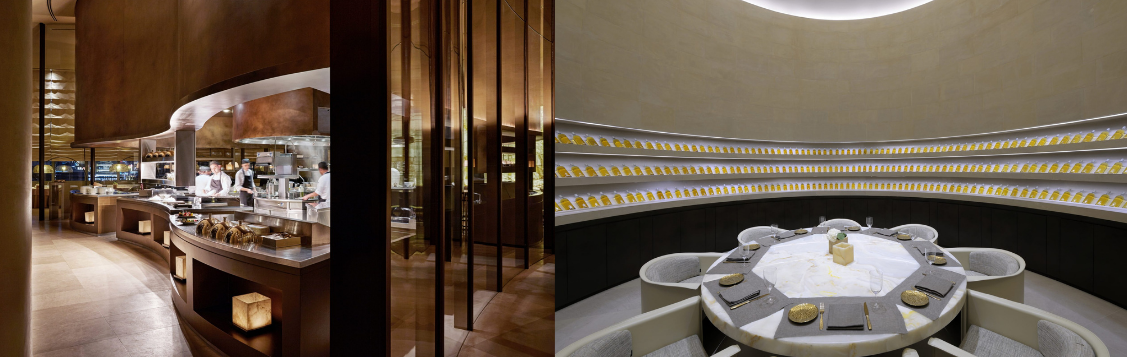
Image source: Giorgio Armani Press.
Prada integrated cafés into its Epicenter stores in the early 2000s, later expanding globally, including the Prada Caffè at Harrods in 2023.
Even earlier than Tiffany, Dior opened its café in Seoul in 2016, which later expanded globally to Paris, Tokyo, and Miami.
And now in 2026, this strategy is accelerating.
Jacquemus has taken over entire pool cafés and beach cafés in Monaco as seasonal brand environments.
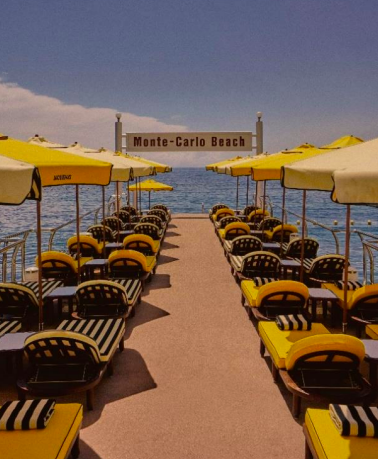
Image source: Monte-Carlo Société des Bains de Mer. Photography by Yoann & Marco.
Acqua di Parma opened pop-ups in Dubai Mall in 2025, tied to fragrance brunch experiences.
So what is actually happening?
Everyone keeps saying luxury brands are opening cafés and restaurants.
But at Orisé Atelier, we ask a different question:
What structural weakness in luxury retail does hospitality solve?
Luxury retail foot traffic volatility post-pandemic
Before 2020, luxury retail had predictable physical traffic patterns.
Flagship stores in Paris, London, Milan, and New York relied heavily on three stable sources:
Tourism
Routine high-income shoppers
Consistent in-person browsing
This created reliable baseline traffic.
Post-pandemic, that predictability weakened. Traffic became irregular, fragmented, and less reliable.
A. Tourism became less predictable
International tourism recovered in volume, but not in behavioral consistency.
Travel patterns became more regionally concentrated and less synchronized.
For example:
This directly reduced predictable flagship traffic in European luxury capitals.
Flagships were designed around tourism concentration. When tourism becomes fragmented, retail stability weakens.
B. Online discovery replaced physical discovery
For decades, luxury brands relied on physical stores as the primary point of discovery, maintaining distance and control over how clients encountered the brand.
That dynamic shifted after the pandemic.
Discovery now happens online first. By the time a client enters the store, the brand and product are already familiar.
As a result, stores receive fewer casual visitors and more intentional ones. Conversion rates are stronger, but overall traffic is less predictable.
Luxury retail now operates with greater efficiency per visitor, but lower baseline volume.
C. Younger consumers visit physical stores less frequently
Gen Z interacts with luxury primarily through digital environments.
They build brand familiarity through Instagram, TikTok, YouTube, and online platforms without entering physical stores.
Physical retail is no longer their default interaction channel.
This reduces baseline store traffic.
Stores must now work harder to attract the same number of visitors that previously arrived naturally.
Customer acquisition cost increased, especially for Gen Z and aspirational buyers
Customer acquisition cost refers to how much a brand must spend to convert a new customer.
This cost has increased significantly since 2020.
A. Gen Z has lower immediate purchasing power
Gen Z engages heavily with luxury brands but purchases less frequently due to income constraints.
They are highly brand-aware but slower to convert.
Bain also identifies younger aspirational consumers as the most engagement-active but conversion-delayed segment, interacting frequently with brands before making their first purchase.
Their first luxury purchases are often vintage, resale, or entry-level products.
This behavior aligns with the rapid growth of the resale market, which Bain estimates will grow 9–12% annually through 2030, outpacing primary luxury retail growth.
This extends the conversion timeline.
Brands must expose them repeatedly before purchase occurs.
Bain notes that luxury brands now require more touchpoints and longer engagement cycles to convert younger clients compared to previous generations.
This increases the acquisition cost per customer.
B. Digital advertising became more expensive
Luxury brands now compete for attention in the same digital environments as premium, mass-premium, and emerging brands.
Instagram, TikTok, and YouTube became highly competitive acquisition channels.
Advertising costs increased significantly between 2021 and 2025.
This increased the cost required to acquire each new customer.
Luxury brands now pay more to achieve the same conversion outcome.
C. Aspirational consumers reduced purchase frequency
Aspirational buyers historically provided volume support for luxury retail.
Post-pandemic inflation and economic uncertainty reduced their purchase frequency.
They remain emotionally engaged with luxury, but financially more cautious.
This reduces predictable revenue flow from aspirational segments.
Traffic still exists, but purchase frequency is lower.
This increases revenue volatility at the store level.
Store operating costs are rising
Luxury retail operates with unusually high fixed costs, driven by prime real estate, specialized staff, security, and continuous maintenance of the store environment.
Rents on major luxury streets such as Avenue Montaigne, Via Montenapoleone, and Fifth Avenue have increased significantly in recent years, raising the threshold required for stores to remain economically viable.
Foot traffic alone is no longer sufficient. Each visitor must generate deeper engagement, stronger loyalty, or greater long-term value to justify the store’s existence.
The operational pressures explain why luxury brands needed a new retail mechanism.
But they do not explain why hospitality works so effectively at stabilizing engagement and future conversion.
The answer lies in behavioral psychology.
Identity proximity effect
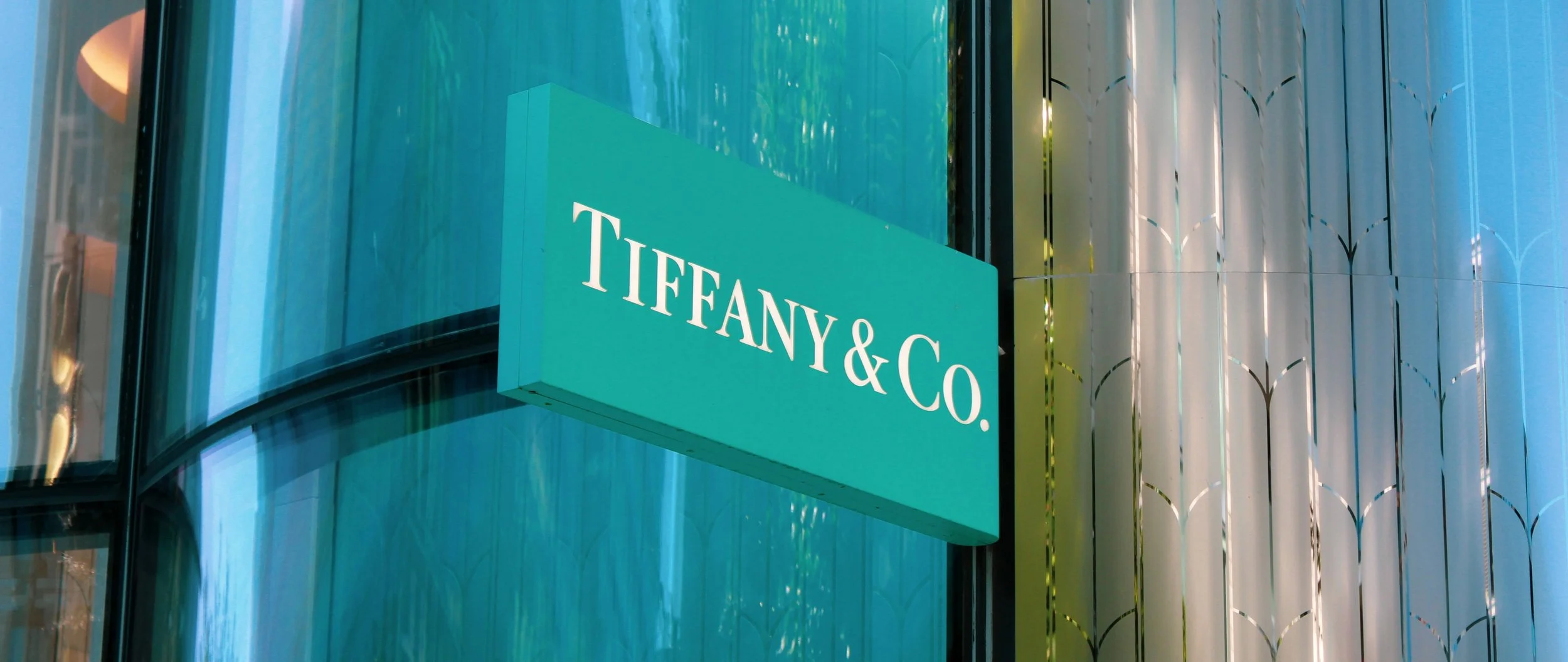
No one buys a Tiffany bracelet purely for its material function. They buy it because of how Tiffany makes them feel.
A Tiffany bracelet is one of the few jewelry pieces recognizable even from a distance, especially the T shape, which acts as a visual shortcut for status.
People are not going to ask, “Where is that bracelet from?” because they already know.
That recognition itself creates social value.
And that social value becomes tied to self-concept.
But when the price point is out of reach for the majority of the brand’s audience, something interesting happens.
Sitting inside a Dior café, entering an LV restaurant, or having breakfast at Tiffany temporarily categorizes the person as part of that world.
Even without owning the product.
This activates what psychologists call:
Enclothed cognition (Adam & Galinsky, Journal of Experimental Social Psychology)
This effect proves that simply being associated with symbolic environments changes self-perception and behavior.
And here is the critical shift:
Physical presence inside the brand environment makes future purchases feel identity-consistent instead of aspirational.
This reduces the internal friction that normally blocks expensive purchases.
They stop feeling like an outsider observing the brand.
They begin feeling like a participant inside it.
Sensory imprinting
If you spend time inside luxury brand cafés, the level of control becomes immediately visible.
At Dior, carved wood, mosaic surfaces, and botanical motifs echo the same visual language found in the house’s couture salons. The environment does not feel separate from the brand. It feels like a continuation of it.
At Prada, lacquered surfaces and precise architectural lines create a setting that feels composed rather than decorated. The space carries the same restraint and discipline present in the product.
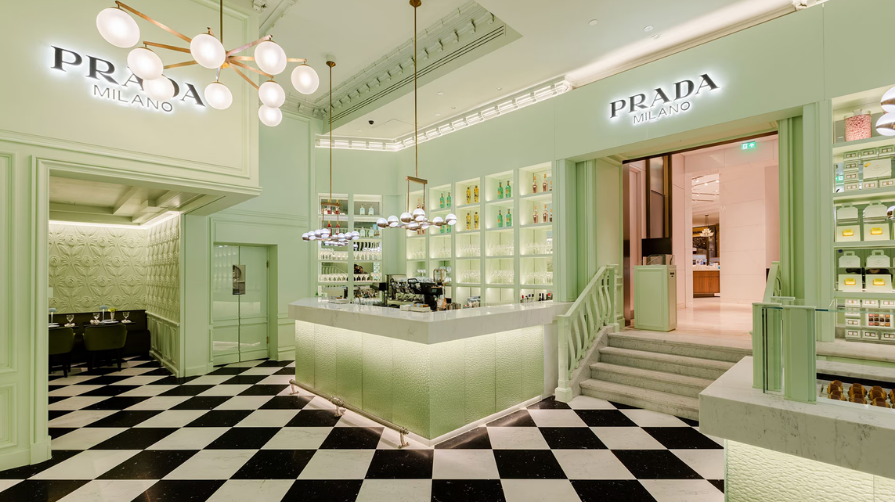
Image source: Prada
Everything is calibrated.
The scent in the air.
The sound level and music selection.
The texture of the table beneath your hands.
The color temperature of the lighting.
Even the names printed on the menu.
These elements do not exist to serve the café alone.
They exist to reinforce the brand’s world through physical experience.
This happens because the brain encodes experiences more deeply when multiple senses are involved at the same time. Texture, scent, sound, and visual atmosphere do not register as separate inputs. They merge into a single emotional memory.
The café is not remembered only as a place.
It becomes part of how the brand itself is felt.
Later, when the person encounters a handbag, a bracelet, or any other object from the same house, that memory resurfaces automatically. The product no longer feels unfamiliar or psychologically distant.
It feels known.
That familiarity lowers internal resistance.
The purchase does not feel like a risk. It feels consistent with an identity that has already begun to form.
Lower commitment entry point
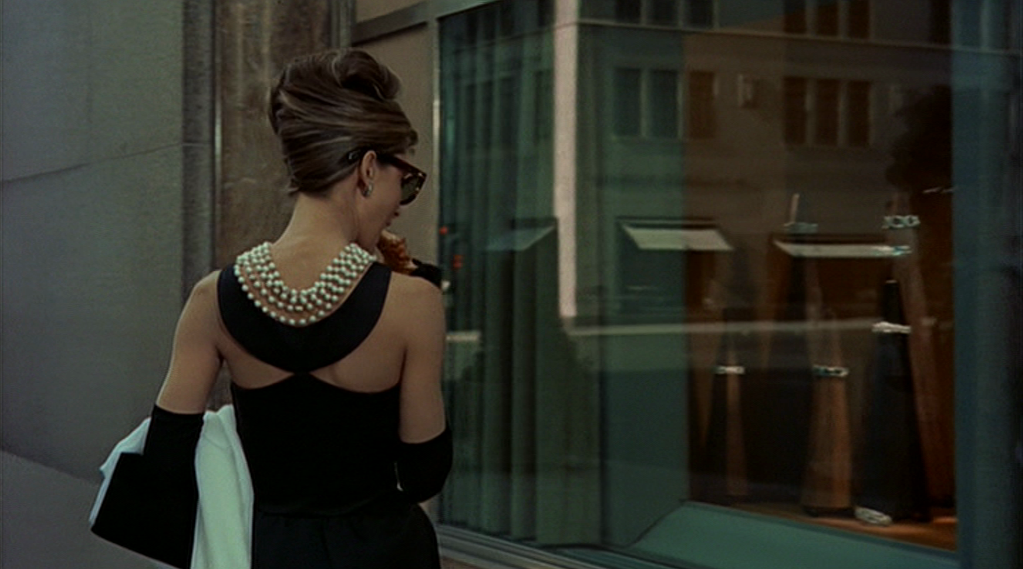
Image source: Paramount Pictures, Breakfast at Tiffany’s (1961)
This brings us back to the iconic scene from Breakfast at Tiffany’s.
Audrey Hepburn’s character hesitates to enter the store because she knows she cannot afford it.
That hesitation is real.
Many people avoid entering luxury stores because they already believe the environment is not meant for them.
They feel exposed. Out of place. Observed.
Luxury brand cafés remove that psychological barrier.
They open the door for the audience to enter the brand environment without pressure, without commitment, and without hesitation.
A $25 café purchase feels low risk.
It allows the customer to enter, sit, and exist inside the brand space comfortably.
This creates psychological familiarity.
And familiarity reduces intimidation.
Later, a larger purchase no longer feels foreign.
It feels like a continuation.
This is a well-documented persuasion phenomenon known as the foot-in-the-door effect (Freedman & Fraser, 1966).
People who agree to a small initial commitment become significantly more likely to agree to a larger one later.
Luxury purchases are primarily blocked by psychological risk, not price.
The café removes that psychological resistance.
It converts symbolic distance into symbolic familiarity.
Social signaling amplification
We now live in a social media environment where people photograph their coffee before drinking it.
Posting breakfast at the Blue Box Café or dessert at Dior communicates something immediately, without needing explanation.
It signals familiarity with the brand’s world.
It signals cultural awareness.
It signals proximity to a level of taste and access associated with luxury.
Posting from a Louis Vuitton café communicates identity alignment to hundreds or thousands of observers instantly.
This does two things simultaneously:
It signals status externally.
And it reinforces identity internally.
Once identity shifts, behavior follows.
People naturally behave in ways that remain consistent with their self-image.
The purchase becomes a confirmation of identity, not a financial decision.
The strategic function of cafés in modern luxury retail
On the surface, luxury cafés and restaurants appear to be creative extensions of the brand.
In reality, they respond to structural changes in retail.
Luxury once relied on predictable store traffic driven by tourism and in-person discovery. That stability has weakened. Discovery now happens online, travel patterns are less consistent, and younger audiences engage with brands long before entering a store. At the same time, flagship retail has become more expensive to maintain.
Hospitality environments extend the brand’s presence beyond transactional retail. They allow individuals to enter the brand’s world more easily and more frequently, without the pressure to purchase.
This builds familiarity, strengthens psychological proximity, and increases the likelihood of future conversion.
Luxury cafés are not peripheral. They help sustain engagement and stability as traditional retail conditions evolve.
Orisé Atelier
Found this analysis valuable?
At Orisé Atelier, we decode luxury brands through structural data and behavioral psychology to reveal how they build authority, sustain demand, and protect long-term performance.
