How Hermès Converts Material Residue into High-Margin Symbolic Objects
The Intelligence Layer
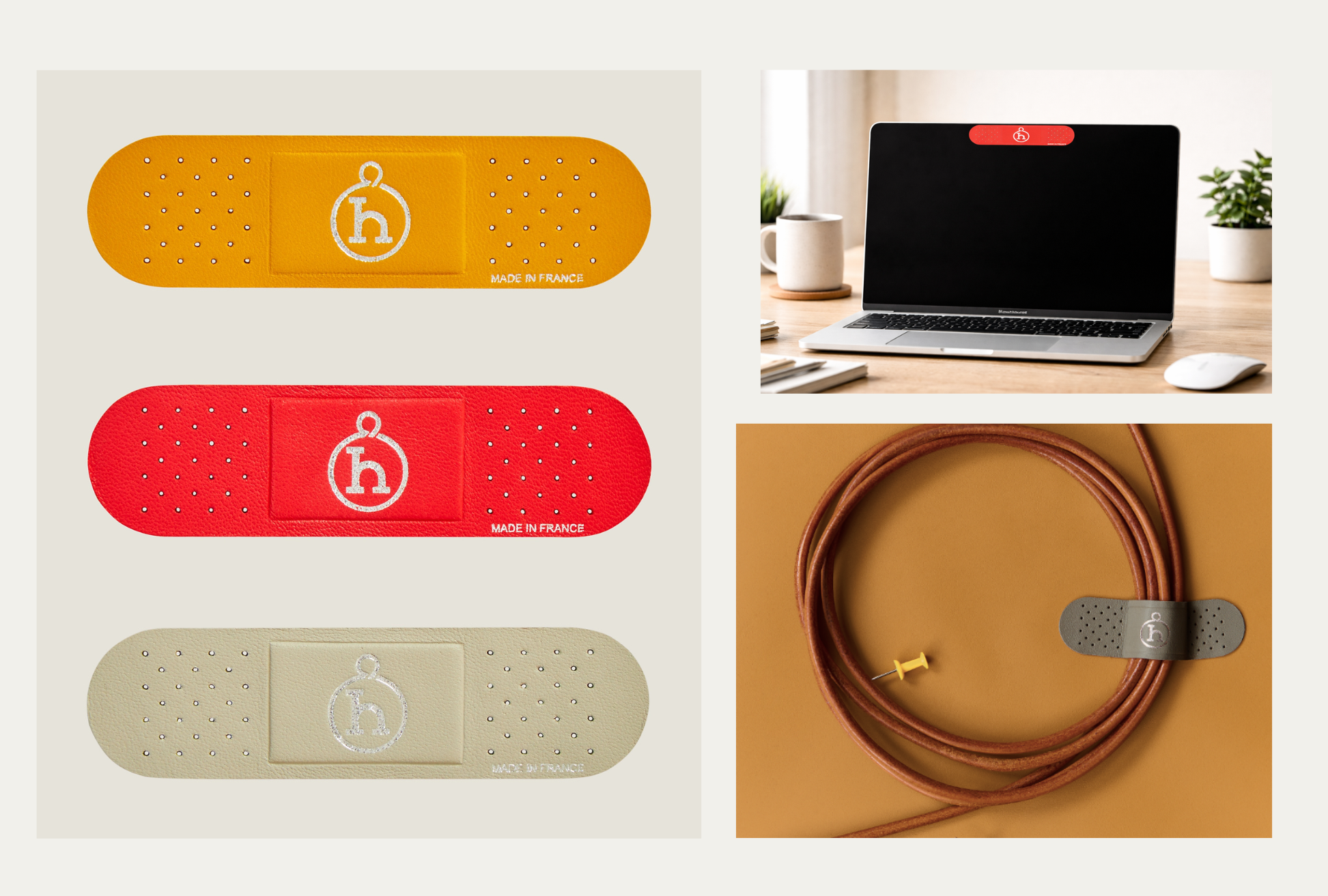
In December 2025, Hermès quietly launched a set of leather patches as part of its Petit h line, priced at £150.
Almost immediately, the product spread across social media. Screenshots circulated with disbelief. The reaction focused less on the object itself and more on what it represented: £150 for something visually resembling a band-aid.
To many observers, it appeared absurd. Excessive. Even unserious.
And yet, within a short time after launch, the patches were sold out.
Public Reaction Focused on the Object, Not the System Behind It
The public reaction framed the product as if Hermès had released a medical bandage at an irrational price. Some compared it to experimental luxury tactics associated with other fashion houses, interpreting it as provocation or shock marketing.

A Hermès patch on a wall to stick a romantic note for your loved one!
First, the patches were never positioned as medical tools. Hermès explicitly described them as decorative, reusable leather pieces intended for hanging photos, covering laptop cameras, attaching notes, or personalizing belongings. They were not sold as functional healthcare products, but as small leather artifacts designed to exist within the Hermès universe.
This distinction matters because Hermès was not monetizing function.
Hermès was monetizing symbolic material.
Controlled Unpredictability as a Core Mechanism of Desire
The release reflects one of the most important and least understood mechanisms behind Hermès' enduring dominance: Controlled unpredictability. Most retail operates on predictable precision. The client selects a specific product, evaluates its specifications, and makes a purchase decision based on clarity and control.
Hermès operates differently.
Hermès deliberately removes exact predictability from the individual product while maintaining absolute control over identity, quality, and perception.
For the Petit h patches, Hermès clearly stated that the leather type, color, size, and composition would vary. Each piece would be unique. The client would not know exactly which variation they would receive.
Under normal retail conditions, this would introduce hesitation. Uncertainty reduces conversion in most commercial environments.
But Hermès has built something very few brands have achieved.
Trust without specification.
Their clients already trust the leather quality, the craftsmanship, and the integrity of the material. The uncertainty exists only at the aesthetic variation level, not at the quality level.
The Birkin Allocation System and the Reversal of Retail Power
This same mechanism exists throughout Hermès' broader operating system, most visibly in its core product strategy.
At Hermès, clients typically cannot enter a boutique and request a precise configuration of a Birkin bag, even if they are willing and able to pay. They cannot simply demand a Birkin 25 in Gold Togo leather with gold hardware on command. Instead, Hermès offers what is available.
The client decides whether to accept or refuse.
This reverses the traditional retail power structure entirely. In conventional retail, the client evaluates the product and decides whether to buy. At Hermès, the client waits. The client hopes. The client is offered.
The offer itself becomes valuable.
Not just the product.
This is controlled unpredictability at its highest form. Hermès controls availability, while the client relinquishes control over outcome. This dramatically intensifies demand. It transforms acquisition into a moment of selection rather than a simple transaction.
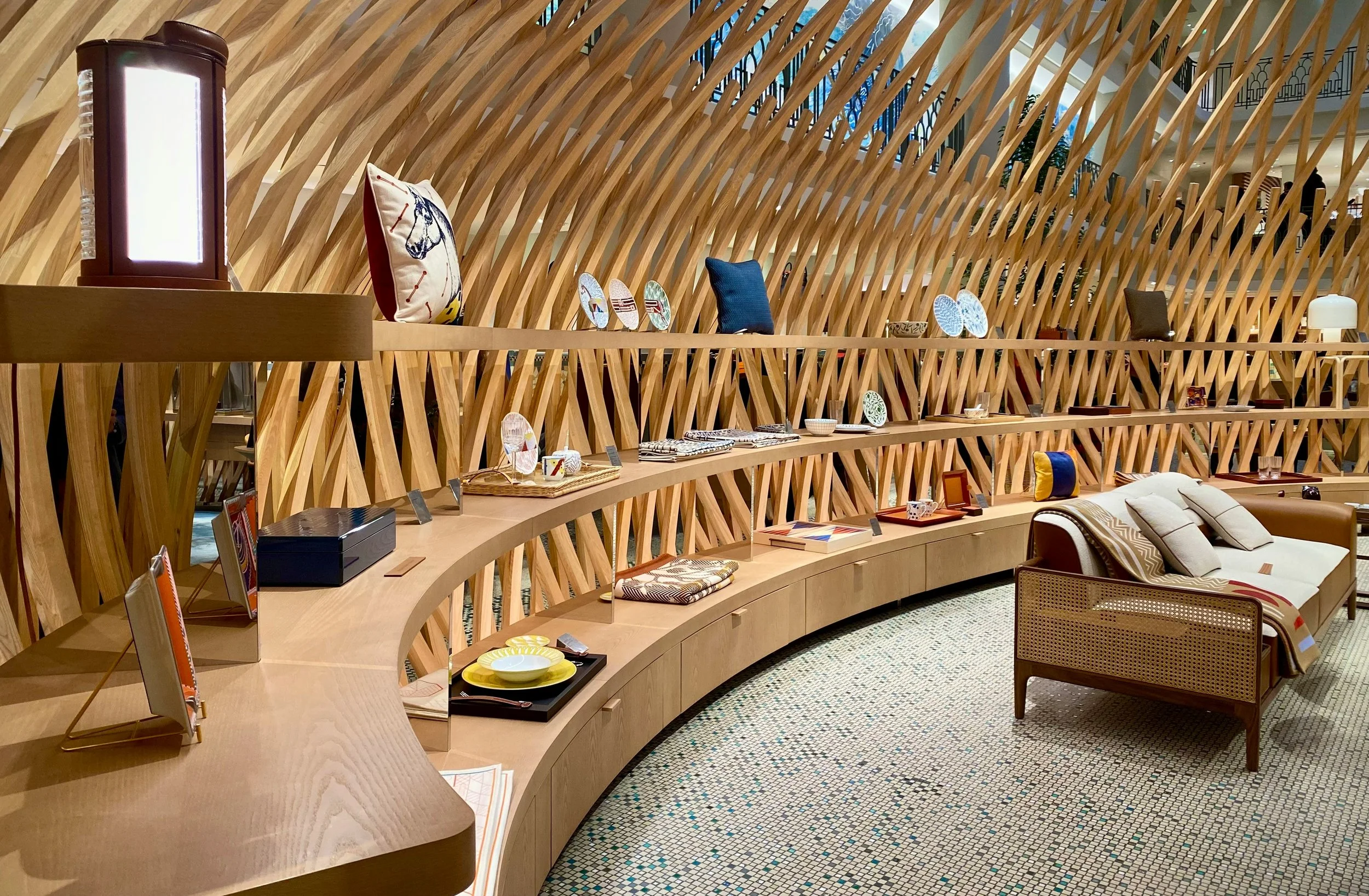
Image source : Unplash/ Armand Khoury
Symbolic Value Replaces Functional Evaluation
Hermès explicitly states:
"Each Petit h piece is unique. The type of leather used as well as the color of your product will be a surprise."
The surprise is not a flaw. It is part of the value architecture.
Luxury products at this level are not evaluated primarily through functional necessity, engineering precision, or technical specifications. They are evaluated symbolically. They exist as material fragments of a larger identity system.
The leather itself carries meaning beyond its physical utility. Even when presented in a small format, the material retains the full symbolic authority of the house.
This connects directly to Hermès' core identity: durability, longevity, and permanence. Even these small leather objects are positioned as lasting pieces, not disposable accessories. Hermès consistently emphasizes repairability and long-term material integrity across all product categories.
This reinforces the perception that Hermès operates outside of disposable consumption cycles.
The value is not justified by function alone. It is justified by permanence. When buyers cannot compare products through technical specifications, they evaluate them symbolically.
Material Efficiency and the Monetization of Production Residue
Beyond perception, the Petit h program also reflects exceptional operational efficiency.
Petit h products are created using surplus leather from primary production processes, including Birkin, Kelly, and other core product lines. This creates multiple structural advantages simultaneously.
First, raw material acquisition cost is effectively zero. The leather already exists within Hermès' production system. Petit h converts residual material into standalone revenue-generating objects.
Second, it expands margin yield per hide. Even small fragments of leather can generate over £150 in revenue, increasing the total economic output from each material input.
Third, it eliminates waste without introducing discount signaling. Hermès does not sell surplus material as discounted excess inventory. Instead, it reframes the material as exclusive collectible objects.
This protects brand integrity while increasing operational efficiency.
What the Petit h Strategy Reveals About Hermès' Operating System
This reveals something fundamental about Hermès' operating system.
Most brands rely on functional justification, visible utility, or production scale to support pricing. Hermès does not require those supports.
Hermès can monetize microscopic volumes of material purely through symbolic authority built over decades.
This is extreme pricing power.
It allows Hermès to convert surplus material into high-margin objects without relying on traditional product value logic.
The object itself becomes secondary.
Orisé Atelier
Found this analysis valuable?
At Orisé Atelier, we decode luxury brands through structural data and behavioral psychology to reveal how they build authority, sustain demand, and protect long-term performance.
