Galliano x Zara. What No One Is Talking About.
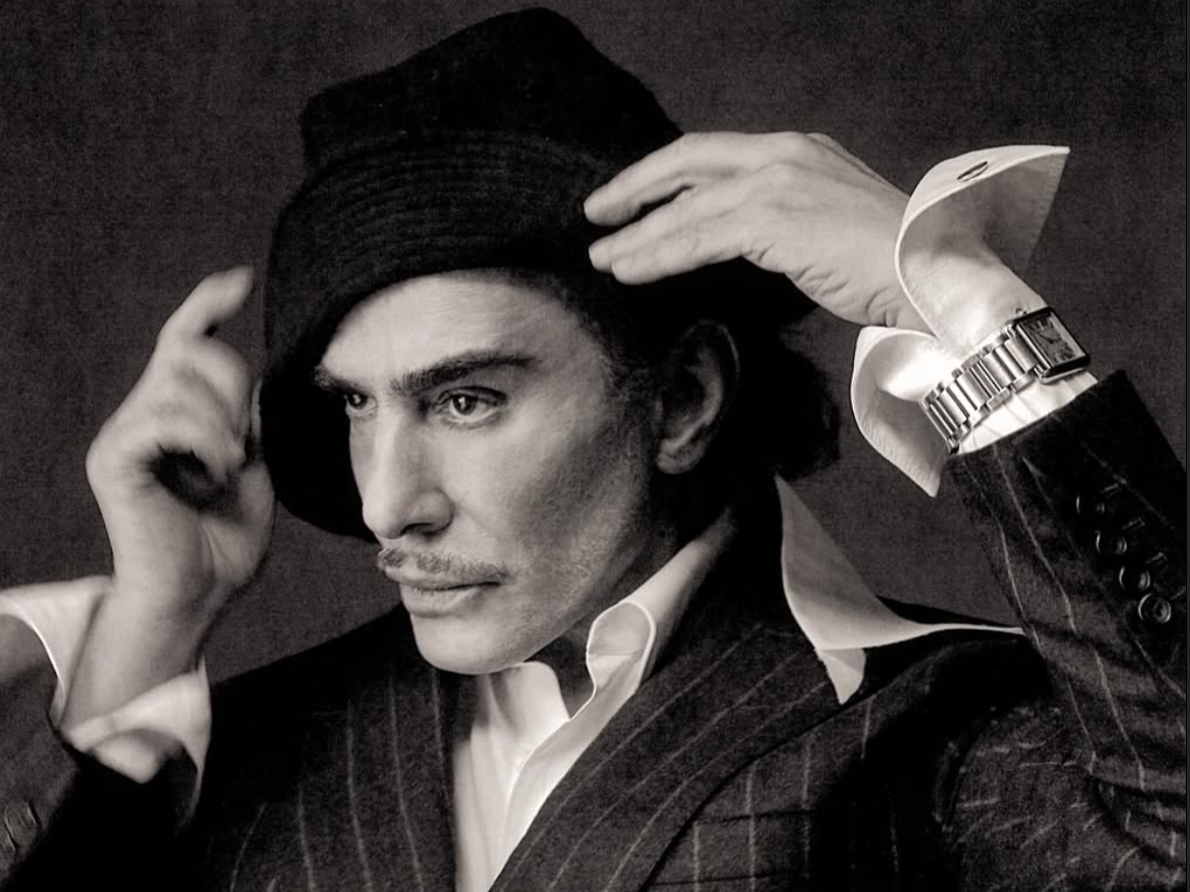
Photography by Szilveszter Makó for @Zara
Everyone is talking about the partnership. Almost no one is asking the right question, which is not whether it sells, but what it exposes about how luxury prestige actually works, and why the most important lesson here has nothing to do with Galliano or Zara at all.
Orisé Atelier Editorial March 2026 Brand Architecture
This piece analyzes publicly visible brand signals and institutional patterns. It does not assert insider knowledge of private negotiations, hiring decisions, or personal motivations.
All of them are looking at the wrong thing.
For the purposes of this analysis, the Galliano x Zara story is less about the individuals involved than about what it reveals structurally about luxury prestige: how it is built, where it lives, and what becomes visible when a designer's work is no longer framed by a major luxury institution.
If you are building an independent luxury brand, this case study is essential reading. Not because you should emulate it. Because you should understand exactly what it reveals about the architecture underneath every true luxury house.
I.
The Vacancy That Told You Everything
Before we talk about Zara, let's talk about the period before Zara.
Galliano departed Maison Margiela in late 2024. His tenure there was widely discussed as creatively successful and commercially important for the house. He left, by most reporting, on good terms.
And then, publicly at least, nothing happened.
The speculation was immediate and loud. Gucci. Balenciaga. Perhaps a return to Dior. Industry observers fed the rumour cycle for months. Based on publicly available information, none of those placements materialized. Gucci announced Demna. Balenciaga announced Pierpaolo Piccioli. Whether other houses considered Galliano internally is not something anyone outside those institutions can know.
What is observable is the sequence: a celebrated designer exits a major house, and no comparable institutional placement follows. That sequence is worth analyzing, whatever the private reasons behind it.
From a brand architecture perspective, the Zara partnership can be read as what filled that public vacuum. Whether it happened because of institutional reluctance, Galliano's own choice, commercial opportunity, or some combination of all three, is not something this analysis can claim to know.
What it can analyze is what the sequence may signal from a brand architecture perspective, and what that signal teaches founders.
The Zara deal didn't happen despite Galliano's stature. It happened because of what the luxury world declined to offer him after Margiela. That gap is worth studying carefully.
Orisé AtelierII.
Prestige Lives in the Building, Not the Person
The most repeated assumption in the current coverage goes something like this: John Galliano is a genius. Geniuses carry their prestige with them. Therefore whoever partners with Galliano inherits some of that prestige. Zara gains elevation. Galliano gains rehabilitation. Everyone wins.
From a luxury architecture standpoint, this is a fundamental misreading of how prestige equity works.
Galliano's authority at his peak did not belong to him alone. It belonged, in significant part, to the structure around him. The Dior atelier. The heritage narrative. The Avenue Montaigne address. The controlled distribution. The institutional mythology that LVMH had spent decades constructing. Galliano was the expressive instrument of that structure. An extraordinary one. But when that relationship ended in 2011, the prestige remained attached primarily to the house. In luxury, that is generally how institutional brand architecture functions.
Margiela offered him a genuinely creative second act inside a house with its own rigorous codes. The work was exceptional by critical consensus. But Margiela's architecture, built on anonymity and conceptual distance, was never structured to restore the specific kind of institutional authority that Dior represented. It gave him a creative home. The two are different things.
So when that chapter ended, the observable result was a designer whose creative reputation had, by many public accounts, been substantially restored, and without a comparable institutional structure to give that reputation its highest market expression. Whether that reflects industry calculation, personal choice, or circumstance is not for this analysis to determine.
What it is for this analysis to say is this: prestige, in luxury, is institutional before it is personal. That is not a flaw in the architecture. It is the point of the architecture.
Prestige does not travel with the designer. It resides in the institution. This is not a flaw in luxury architecture. It is the point of the architecture.
Orisé AtelierIII.
The Metric That Will Lie to Everyone
Here is what is likely to happen when the collection drops. There will be queues. There will be sellout notifications. There will be a wave of content declaring that "the numbers don't lie" and that Galliano has "proven his relevance" and that Zara has "successfully elevated its brand positioning."
From a luxury brand architecture standpoint, none of those metrics will mean what people claim they mean.
Orisé Atelier ConceptNumerical Credibility Bias is a label I use for the phenomenon whereby revenue figures, sellout rates, and engagement numbers are deployed as proof of brand equity, when in reality they are measuring something else entirely. It is one of the most common ways fashion coverage can overstate what certain metrics actually prove.
Sellout velocity at Zara measures appetite for affordable, limited product attached to a culturally legible name. It measures Zara's supply chain discipline and scarcity engineering. What it is poorly equipped to measure is how the partnership is read in the institutional spaces where luxury decisions are made. Those audiences are not shopping the drop. And a sellout notification alone is unlikely to change how that sequence is read in institutional luxury circles.
For founders, this is the lesson: learn to read which metrics are measuring what you think they are, and which ones are performing authority while pointing at something else entirely.
IV.
What Heritage Houses Protect and Why
This is the conversation most coverage is missing, and it is the most instructive one for anyone building genuine luxury brand equity.
Consider how houses like Hermès have historically operated. Based on their long-term brand behavior, the pattern is consistent: controlled distribution, minimal mass-market association, and a tight boundary around whose name appears alongside the brand in the cultural imagination. Whether this reflects explicit policy or emergent brand logic is not something an outside observer can state with certainty. What is observable is the consistent pattern of behavior across decades.
From a brand architecture reading, that pattern reflects something important: the scarcity of creative identity functions as a brand signal, not just the scarcity of product. When creative identity is distributed broadly, the signal weakens. That is not an opinion about what these houses believe. It is an observation about what their behavior produces.
From the outside, Dior, Chanel, and other heritage houses appear to show similar long-term patterns of controlled association. Whether by design or accumulated institutional logic, they operate in ways that protect the associative value of their creative identity. The result, observable from the outside, is that creative direction and mass-market association rarely appear together among heritage houses positioned at the highest end of the luxury market.
The Galliano x Zara partnership is interesting precisely because it sits outside that pattern. Not as a moral failure. As a structural signal worth reading.
The scarcity of creative identity is not a feature of true luxury. It is the architecture. It is the product itself.
Orisé AtelierV.
What This Teaches a Founder Building From Zero
You do not have LVMH's institutional walls. You do not have decades of heritage mythology. You cannot afford to make association decisions casually, because every association you accept either builds or erodes the signal value you are trying to establish.
The Galliano x Zara sequence, whatever its private causes, offers three observable lessons for founders.
First: build institutional architecture, not personal platforms. If your brand's perceived value depends entirely on your presence in it, you have not built a brand. You have built a personal following. Those have very different ceilings and very different vulnerabilities. Build codes. Build architecture. Make yourself replaceable by design.
Second: treat creative identity like distribution. The associations you accept in your early stages are extraordinarily difficult to undo as you scale. Be selective before you need to be, not after.
Third: know which metrics are lying to you. When the numbers come in and the internet declares triumph, ask yourself: triumph with whom, exactly? That question will tell you more than the number itself ever could.
The Galliano x Zara partnership will generate enormous commercial interest, significant revenue, and considerable cultural noise. None of that makes it a luxury story in the structural sense.
This analysis is one reading of a public sequence of events. It does not claim knowledge of private decisions, internal reasoning, or personal circumstances. What it claims is that the sequence, read through the lens of luxury brand architecture, teaches something worth understanding.
Prestige requires institutional protection. Creative identity requires controlled association. Desire requires scarcity, not just of product, but of access, of context, of whose name appears next to whose.
The partnership is notable because it sits outside the kind of institutional setting that has traditionally shaped luxury prestige. Watch what that reveals. Then build accordingly.
Orisé Atelier covers the mechanics of true luxury, not the news cycle, but the structural decisions underneath it. For founders building real brand equity from the ground up.
Orisé Atelier
Found this analysis valuable?
At Orisé Atelier, we decode luxury brands through structural data and behavioral psychology to reveal how they build authority, sustain demand, and protect long-term performance.
