How Luxury Brands Use Cultural Positioning to Create Trends That Dominate the Market
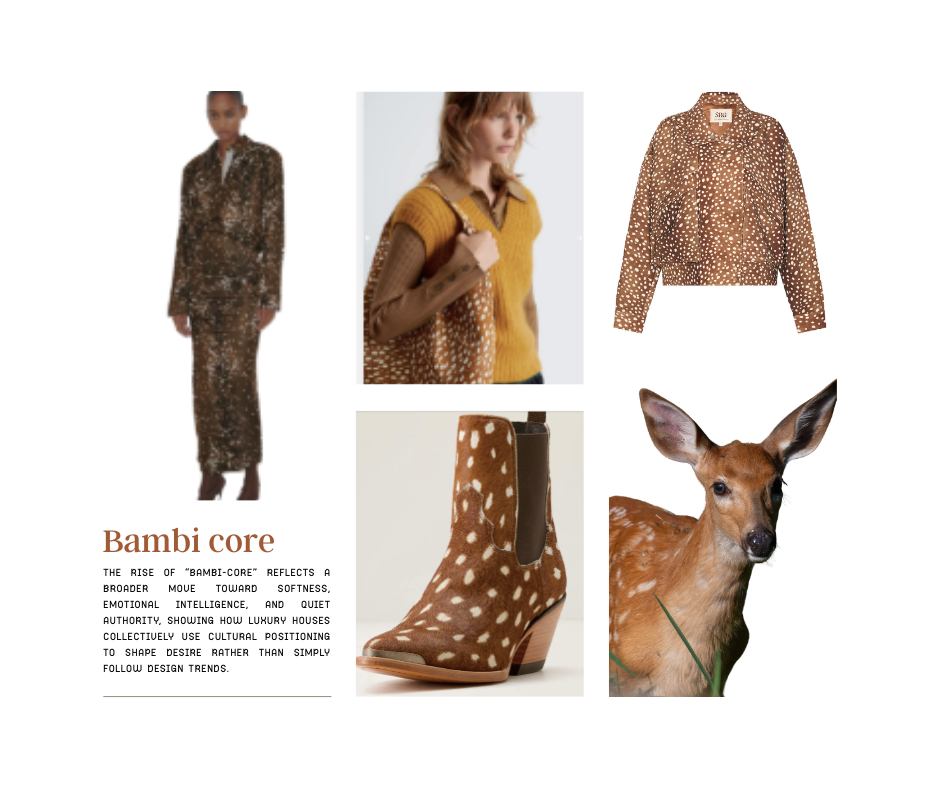
We are currently seeing the rise of what many call “Bambi-core” in luxury fashion — softer wildlife motifs, delicate animal imagery, and a noticeable shift away from aggressive prints.
Audiences may love the aesthetic, but here is the deeper truth:
Luxury brands do not invent trends the way mass-market brands do.
Luxury trends are not random design inspiration.
They are cultural positioning decisions disguised as aesthetics.
Animal prints are one of the clearest examples of this system.
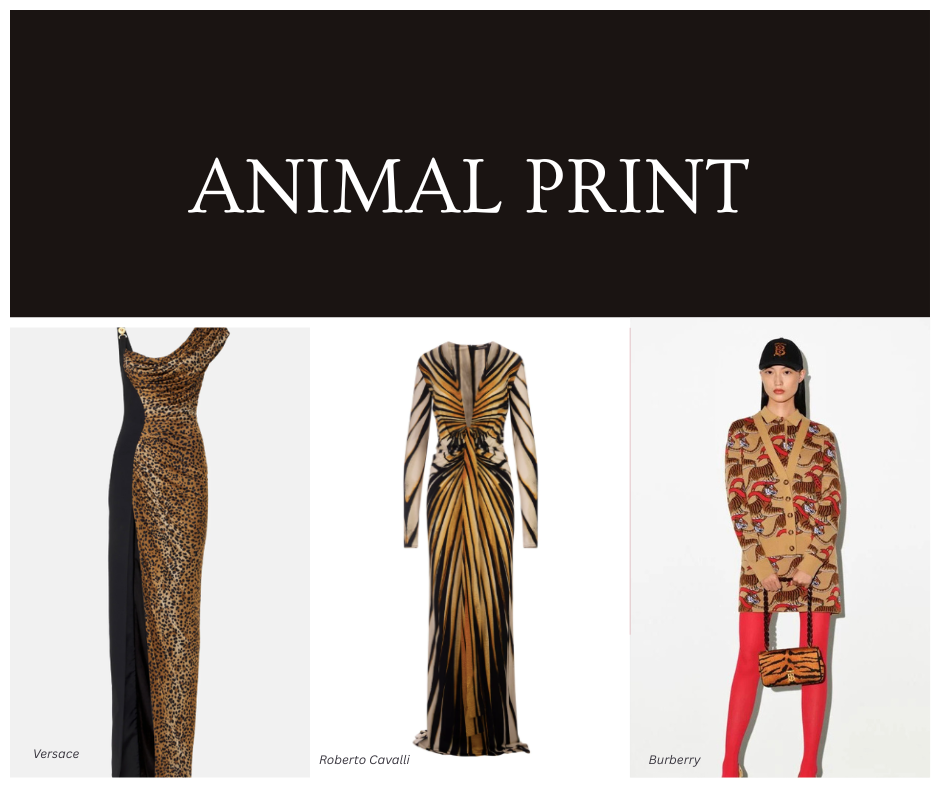
Over the years, we have seen zebra, tiger, leopard, and snake motifs dominate fashion cycles. Each moment felt visual but the real shift was psychological.
So why Bambi? Why now?
Luxury Houses Operate as Cultural Barometers
Luxury is more than fashion in the conventional sense. It functions as a cultural barometer, a system that detects emotional and psychological shifts in society before the general public consciously recognizes them.
Like a weather barometer measures atmospheric pressure, a cultural barometer measures pressure within culture.
It senses:
rising collective anxiety
desire for nostalgia
appetite for excess versus restraint
shifts in how power is expressed
overall mood changes in society
before these feelings become visible trends.
Luxury houses, couture designers, and high art institutions constantly observe signals such as:
political instability
economic confidence or fear
generational attitudes
social fatigue
technological overload
They are essentially asking:
“What is the world feeling right now even if people cannot articulate it yet?”
From this reading of the moment, visual languages emerge. Prints become symbol systems. Animals become archetypes.
When a certain animal enters fashion, it signals that the emotional archetype of that animal aligns with the psychological state of the era.
Why Bambi-Core Now?
To understand this shift, we need to step back and consider the broader cultural climate shaping collective taste.
We are living through a period defined by economic tension, geopolitical uncertainty, technological fatigue, growing anxiety around artificial intelligence, and a fragmentation of social identity.
In moments like these, people instinctively gravitate toward natural and archetypal symbols that offer emotional grounding and a sense of psychological safety.
Animal imagery returns as a form of symbolic protection, yet not all animals communicate power in the same way.
Previous cycles favored predators such as leopard, tiger, and snake, symbols associated with dominance, overt sexuality, expansion, and visible strength.
The emergence of Bambi-like imagery signals a different emotional direction, one centered on softness after exhaustion with aggression, vulnerability reframed as refinement, quiet and internalized status, and a nostalgia for innocence that counters hypersexualized fashion expressions.
This is not a retreat from power, but a transformation of it, where authority is expressed through subtlety, emotional intelligence, and controlled restraint.
Why All Luxury Houses Move Together
Luxury may be competitive, but it is also culturally synchronized.
When one major house successfully introduces a new symbolic code, it creates cultural permission for the rest of the system.
Other houses follow because:
It confirms the mood shift is correct
No house wants to appear culturally out of alignment
Luxury leadership often operates through elite consensus
This is not imitation, but a shared cultural alignment among those shaping the direction of the industry.
What Is Really Happening
Luxury fashion is not simply changing prints; it is quietly redefining what status feels like.
The center of power is shifting from aggression toward sensitivity, from display toward restraint, from overt sexuality toward emotional depth, and from loud wealth toward quiet authority.
The aesthetic simply follows that movement.
Bambi core is not a cute trend but a clear signal of how luxury is recalibrating power for this moment in culture.
What This Means for Founder-Led Independent Luxury Brands
If you are building a luxury brand, understanding symbolic authority is essential, especially in luxury brand positioning.
Symbolic authority is not built on product alone. It emerges when a brand has the power to define what elegance means, shape aesthetic standards, and set cultural codes that others later follow.
Without symbolic authority, a brand competes on materials, quality, and craftsmanship. These matter, but they do not create long term prestige on their own. What sustains long term luxury brand growth is the ability to operate at the level of meaning, identity, and cultural relevance.
Luxury brand positioning therefore requires reading cultural signals rather than reacting to surface trends. Trends are visual outcomes. Cultural signals are the emotional and psychological shifts that give those visuals meaning.
Orisé Atelier was created to support founders building luxury brands at this level, helping them move from aesthetic decisions to cultural positioning, and from products to true luxury brand architecture.
