The Psychology Behind Miu Miu’s Ageing Leather Campaign
Why Modern Luxury Is No Longer About Perfection
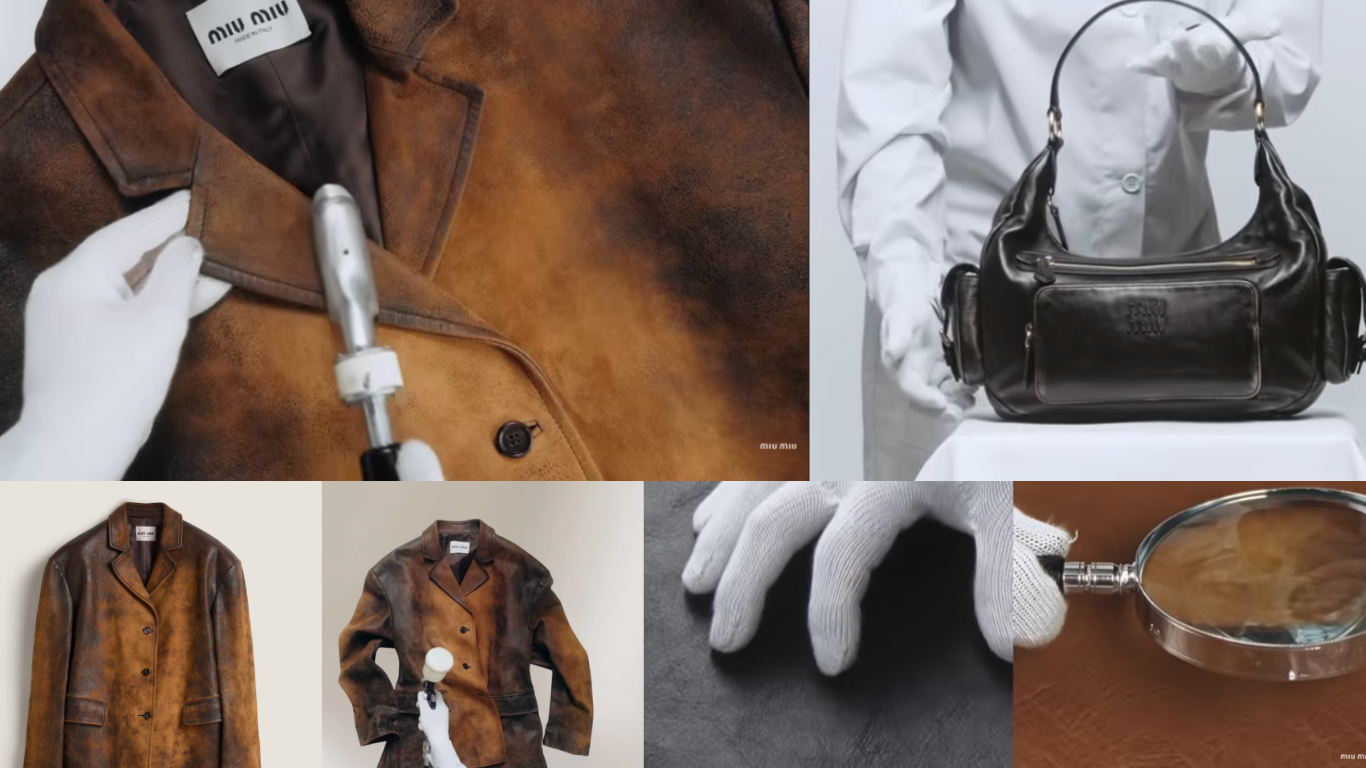
In early 2026, Miu Miu unveiled a campaign that appeared deceptively simple: close-ups of leather ageing over time.
Creases. Softened edges. Wear.
No glamour shots. No aspirational chaos. No performative perfection.
At surface level, it looked like a celebration of craftsmanship.
At psychological level, it was something far more strategic.
This campaign was not selling leather.
It was selling temporal authority.
1. From Perfection to Permission
For years, luxury trained its audience to desire the untouched: flawless finishes, unused objects, immaculate presentation.
Perfection functioned as proof of value.
That logic no longer holds.
Today, pristine surfaces generate tension rather than desire. They imply fragility, vigilance, and the constant risk of loss. Ownership becomes performative. Use becomes a threat.
Miu Miu’s ageing leather introduces a different proposition.
Luxury that does not require protection.
By presenting wear as intrinsic rather than accidental, the brand removes the anxiety of preservation. The object becomes safe to live with. And psychologically, safety precedes attachment.
This is a quiet but radical shift, from admiration at a distance to participation without fear.
2. Time as the Ultimate Status Marker
In luxury psychology, time has always carried more weight than money.
Money can be accelerated.
Time cannot.
By centering ageing, Miu Miu aligns itself with a consumer who is not chasing immediacy, novelty, or proof. The campaign speaks to someone financially stable, psychologically settled, and oriented toward continuity rather than accumulation.
The message is not that the product lasts.
The message is that the owner expects to last.
This is temporal confidence, one of the clearest indicators of true elite positioning.
3. Wear as Personal Authorship
Luxury objects traditionally function as symbols: identical, recognisable, frozen at the moment of purchase.
Ageing disrupts this logic.
Once wear is permitted, no two pieces remain the same. Creases become specific. Marks become autobiographical. The object begins to record movement, routine, and presence.
Psychologically, this transforms the product from a status signal into a personal artefact.
Objects that evolve with their owner form stronger emotional bonds. They move from possession to companionship.
This is how heirlooms are created not through heritage language, but through lived use.
4. The Quiet Detachment of the Anti-Flex

Contemporary status signalling has inverted.
The highest-status individuals no longer need to demonstrate value through:
pristine condition
resale logic
visible preservation
By showcasing worn leather, Miu Miu communicates an absence of economic anxiety.
The implication is subtle but unmistakable:
I do not need this to remain perfect. I am not preserving value — I am living with it.
This is post-aspirational luxury.
Status expressed through ease rather than control.
5. Cultural Alignment Without Moralising
Without referencing sustainability, responsibility, or ethics, the campaign aligns with a broader cultural fatigue: exhaustion with disposability, replacement cycles, and endless novelty.
Crucially, Miu Miu does not instruct or justify.
It does not explain itself.
It simply demonstrates permanence.
That restraint preserves authority. Moral language would have weakened the signal. Silence, here, is strength.
6. Permanence as the Deepest Luxury Fantasy
At its most resonant level, the campaign speaks to something rarely articulated.
In a world shaped by acceleration, instability, and erasure, an object that ages beautifully offers reassurance. It suggests continuity. It implies that traces matter. That use does not diminish meaning.
The message is not commercial.
It is existential.
You will still be here.
Your life will leave marks.
Nothing meaningful disappears.
Luxury, at its highest function, has always promised this.
Why This Only Works for Miu Miu
This strategy succeeds because Miu Miu already holds cultural credibility and aesthetic authority. Its audience is comfortable with ambiguity and nuance.
For brands without this foundation, ageing would read as neglect. Wear would signal loss of control rather than confidence.
Psychological positioning must come before messaging.
Otherwise, the narrative collapses.
Orisé’s Insight: Luxury Has Shifted From Display to Duration
This campaign confirms a larger shift shaping modern luxury.
Value is no longer proven at the moment of purchase.
It is proven over time.
Brands that understand this will build legacy.
Those that do not will remain trapped in novelty.
At Orisé, this is the distinction we continue to observe:
Luxury is not designed to impress.It is designed to endure.
