Jonathan Anderson brings back the Dior era, where women are dressed to be adored.
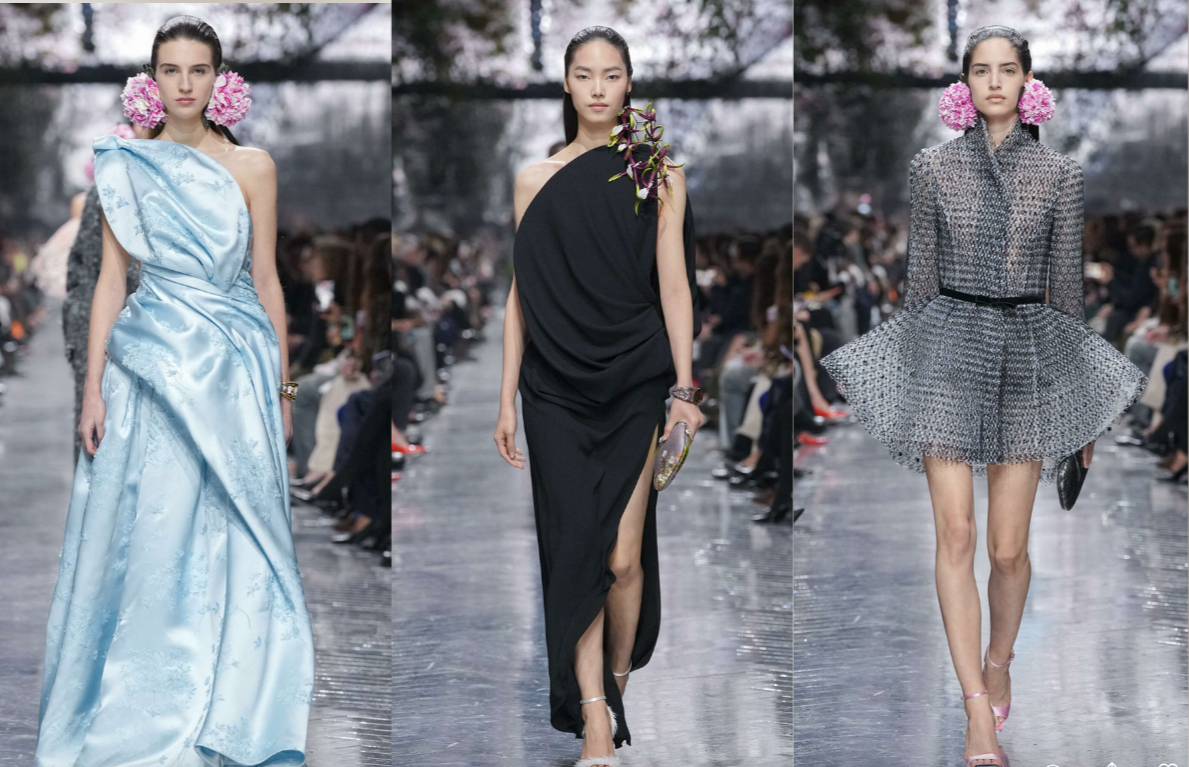
For a period, fashion moved away from Dior’s idea of the woman.
The era of the flower, the sculpted waist, the dramatic silhouette gave way to restraint.
Lines sharpened, shapes flattened, clothes grew quieter.
Authority shifted toward tailoring and minimalism, beauty softened and made easier to wear.
Then Dior Spring Summer 2026 Haute Couture under Jonathan Anderson appears, and the figure changes.
She is shaped again.
Volume gathers at the chest. Fabric folds with intention.
Surfaces carry texture that feels constructed and femininity operates as structure.
That instinct is embedded in the house. Christian Dior did not design women to dissolve into modern life.
The 1947 New Look structured the body into a silhouette that occupied space, with defined waists, voluminous skirts, and fabric used to build form rather than simply follow it.
Jonathan Anderson recognizes that language and translates it through his own sensibility, treating clothing as form, almost as object, and this collection makes that dialogue visible.
From here, the collection unfolds through close readings of shape, volume, and surface as expressions of Dior’s house DNA.
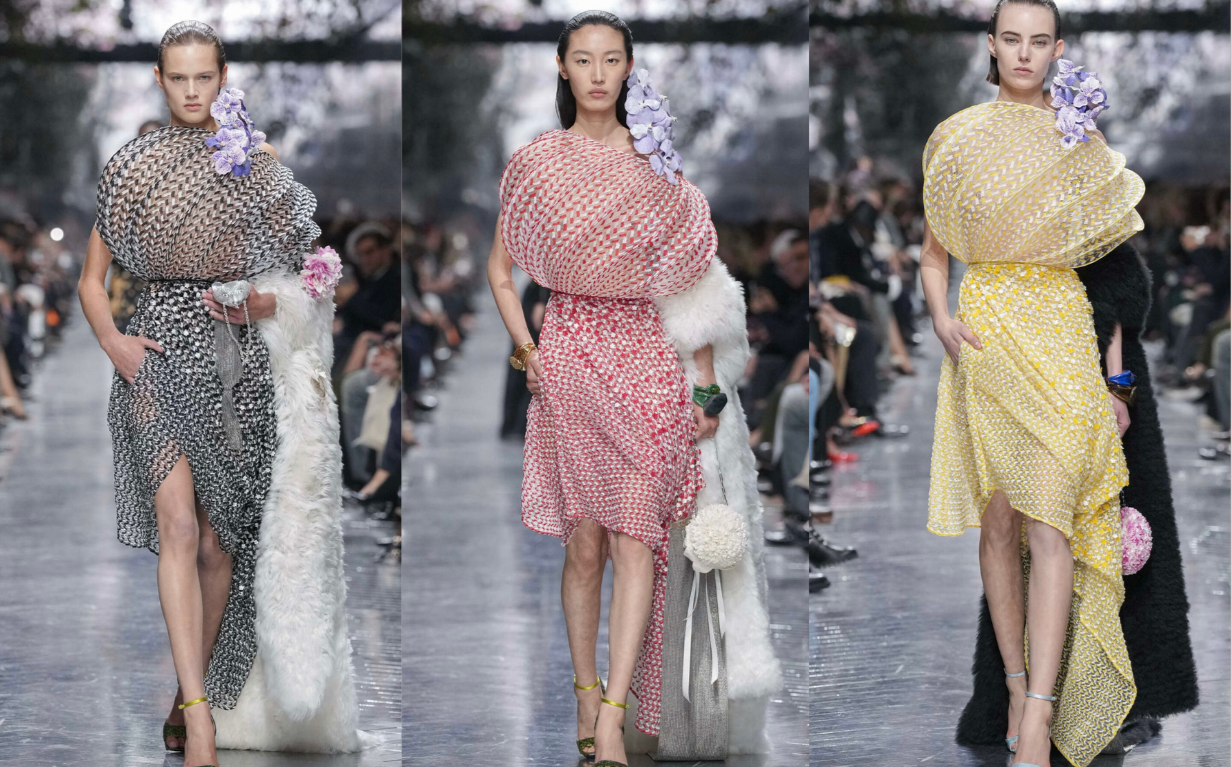
These three looks function as one idea explored in variations.
A rounded, inflated upper volume, defined waist, fluid asymmetrical skirt, and densely worked, petal-like surface link them together. The silhouette shifts attention away from anatomy toward a designed form, a classic couture logic where the woman is read as outline rather than body.
Color changes the mood, not the structure. Warmer tones lean toward Dior’s garden romanticism; higher contrast sharpens the graphic, structural reading.
The surface carries Dior’s heritage of floral craft and light-reactive texture, while the abstraction of those motifs reflects Jonathan Anderson’s language of reduction and form. The shoulder flower becomes placement, not decoration. The skirt restores softness, letting elegance temper the sculptural upper half.
This is not Dior versus Jonathan, but Dior femininity articulated through Jonathan’s sculptural eye, where the house holds the romance and refinement, and the designer shifts proportion and form.
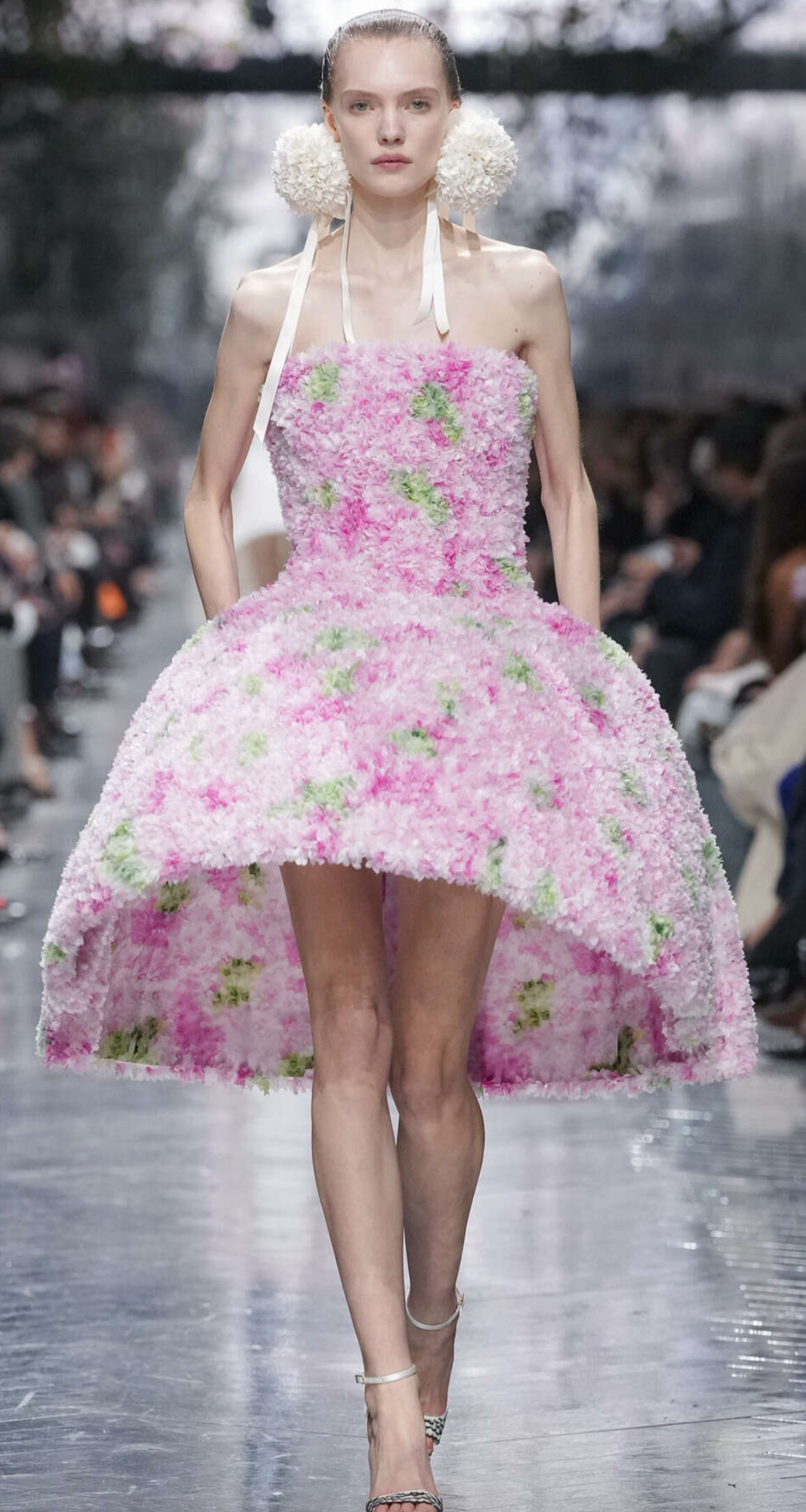
At first glance it carries a light, almost doll-like impression, but the construction is too deliberate for it to be read as merely charming. The lightness is controlled. The volume is couture.
The shape follows a clear Dior logic: a defined bodice, a structured waist, an exaggerated skirt. This is the inheritance of the New Look, where the female form is shaped through outline rather than traced through anatomy.
Here, the volume shifts into a high–low sculptural form, almost bell-like in suspension. The proportion carries theatricality, turning the wearer into a figure rather than a passerby.
There is a faint ballet, fairytale atmosphere, yet the neckline remains clean, the straps simple, the structure disciplined. Nothing feels ornamental for its own sake.
The result is stylized femininity rather than character dressing.
That insistence on silhouette as form first, body second, reflects Jonathan Anderson’s approach, where the eye registers design before anatomy.
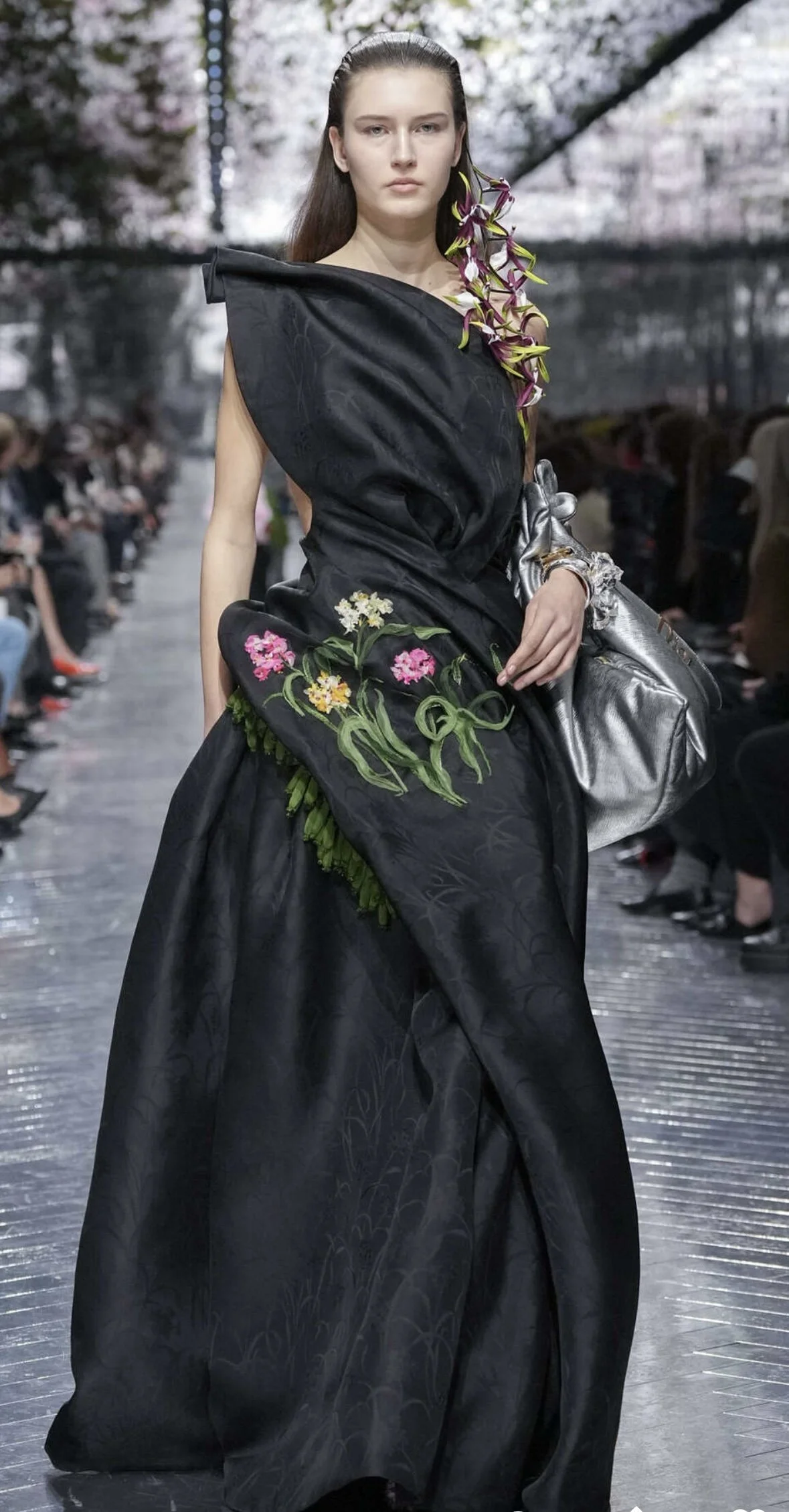
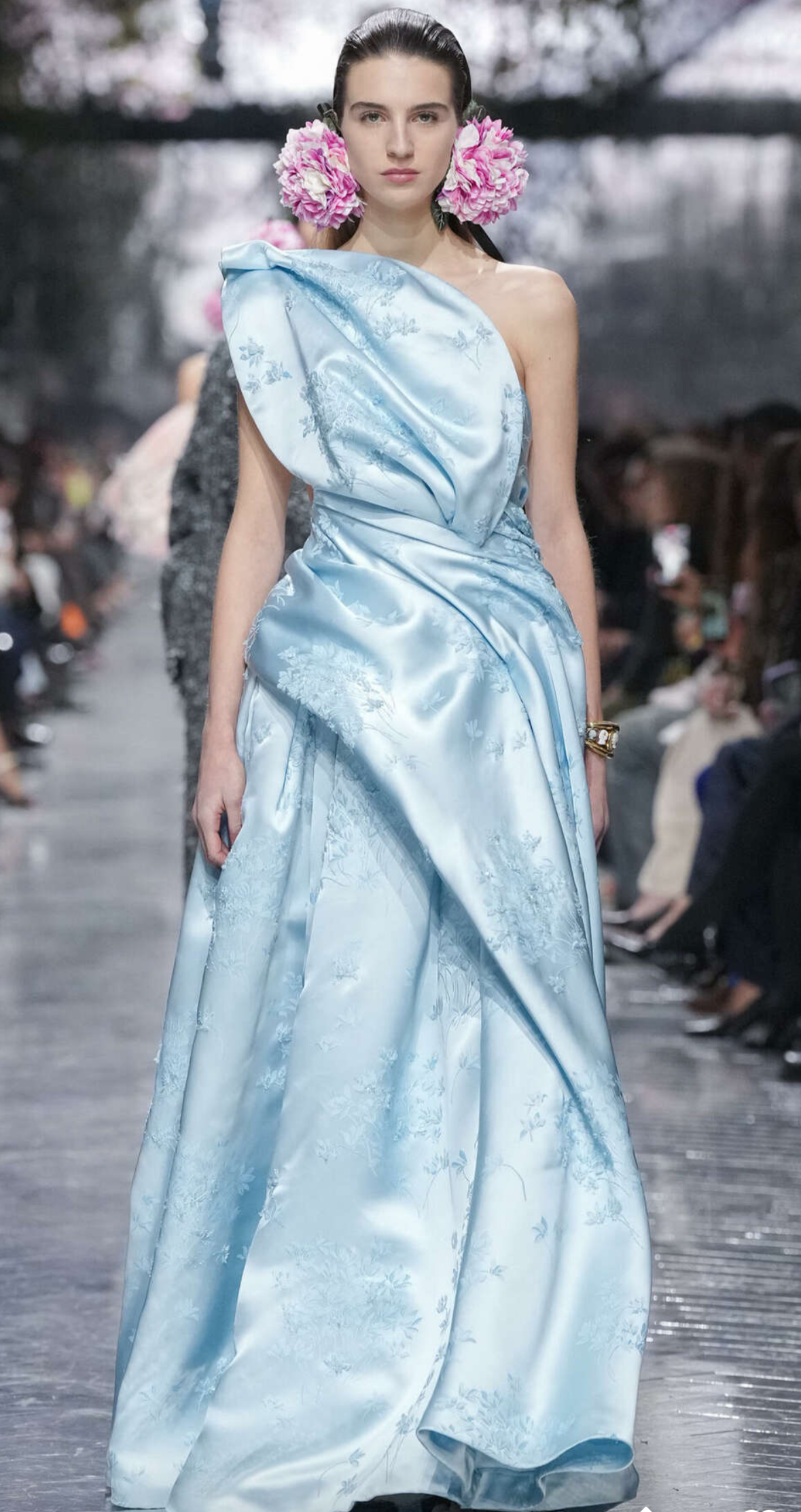
The authority of the silhouette reads immediately as Dior: a long line, controlled volume, and structure achieved through disciplined drape rather than exaggeration, giving the look an established couture composure. The floral language reinforces this, with flowers integrated into the garment in an almost botanical way, echoing Dior’s association with gardens, refinement, and femininity. The use of black deepens the message, signaling elegance, control, and seriousness.
Jonathan’s presence appears in the treatment of form. The bodice folds into angled, sculptural planes, as if fabric were held mid-movement, and the structured extension at the hip introduces spatial thinking beyond vintage Dior. Subtle asymmetry adds tension where the house historically favored harmony.
The figure that emerges is composed, self-contained, and serious, aligning with Dior’s idea of elegance as controlled presence. While the look sits close to Dior heritage, it is not nostalgic; it is Dior elegance articulated through Jonathan Anderson’s sculptural intelligence, where refinement and floral tradition meet architectural shaping and modern form.
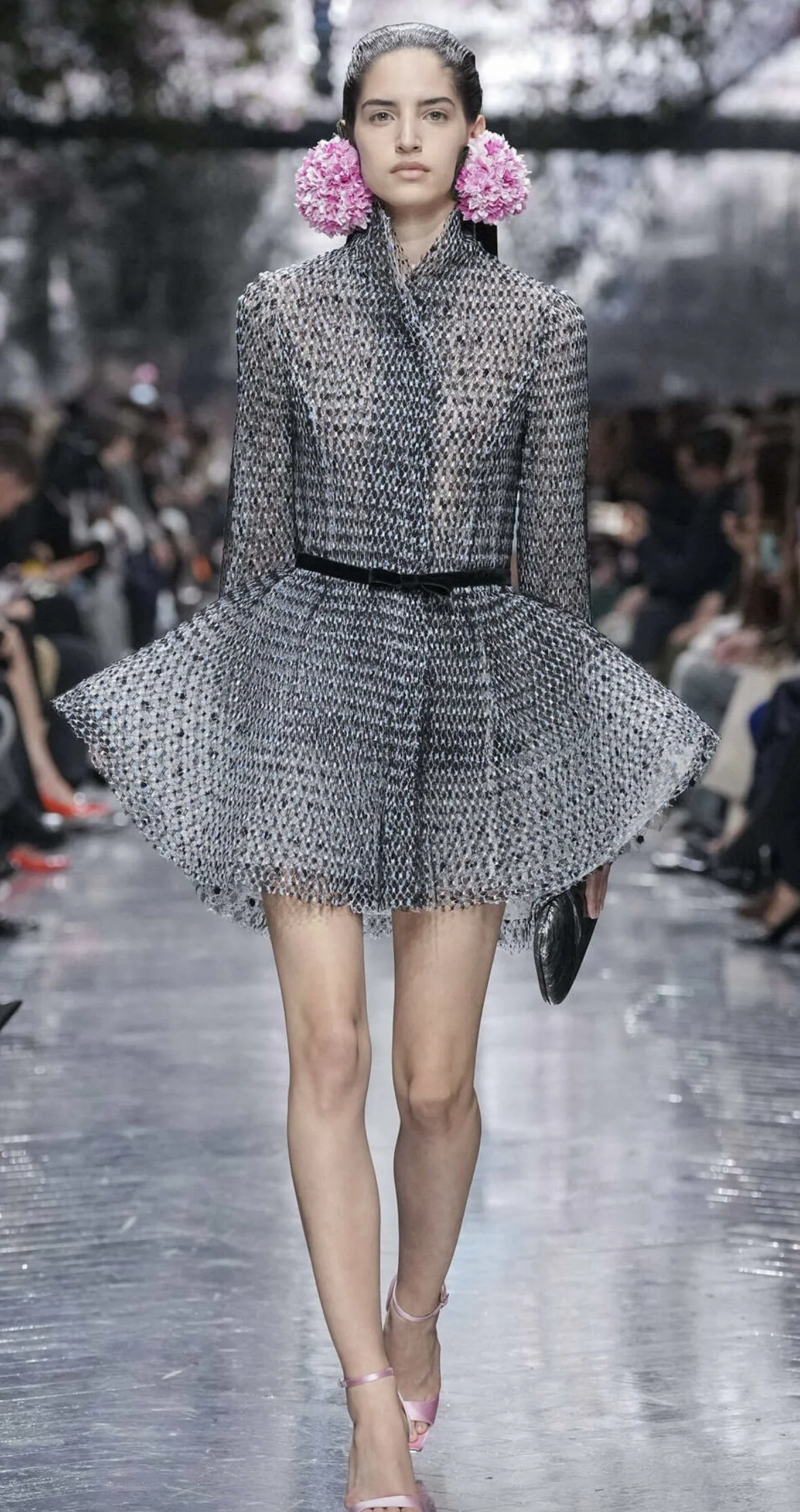
It recalls 1950s Dior cocktail dresses, reinterpreted through Jonathan Anderson’s attention to surface and a subtly abstracted texture.
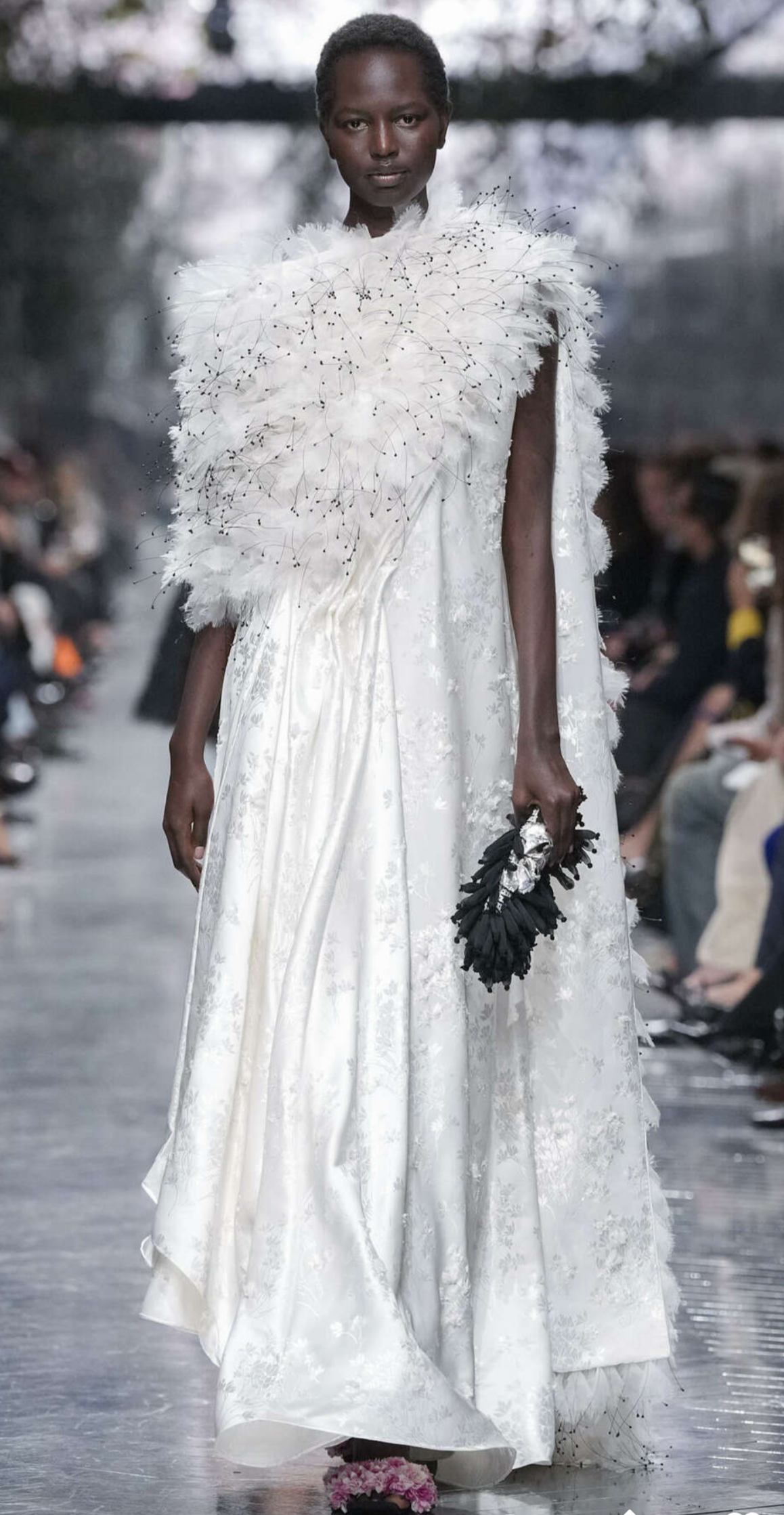
This look speaks directly to the house DNA.
Dior has always privileged constructed shape over natural anatomy; the New Look was about designing a waist, not following one. Here, the feathered shoulder creates a new upper silhouette, and the dress moves away from the body, so the figure is read through the form built around it.
Petal-like textures and a soft botanical atmosphere recall Dior’s historical romantic language, handled here with couture control rather than trend florals.
The emphasis on the shoulder reflects Jonathan Anderson’s hand, shifting drama upward, while the house logic remains intact and only the distribution of form changes.
This is where the designer’s individual signature recedes and the house language takes precedence, aligning with the way Christian Dior conceived the woman through silhouette, structure, and presence.
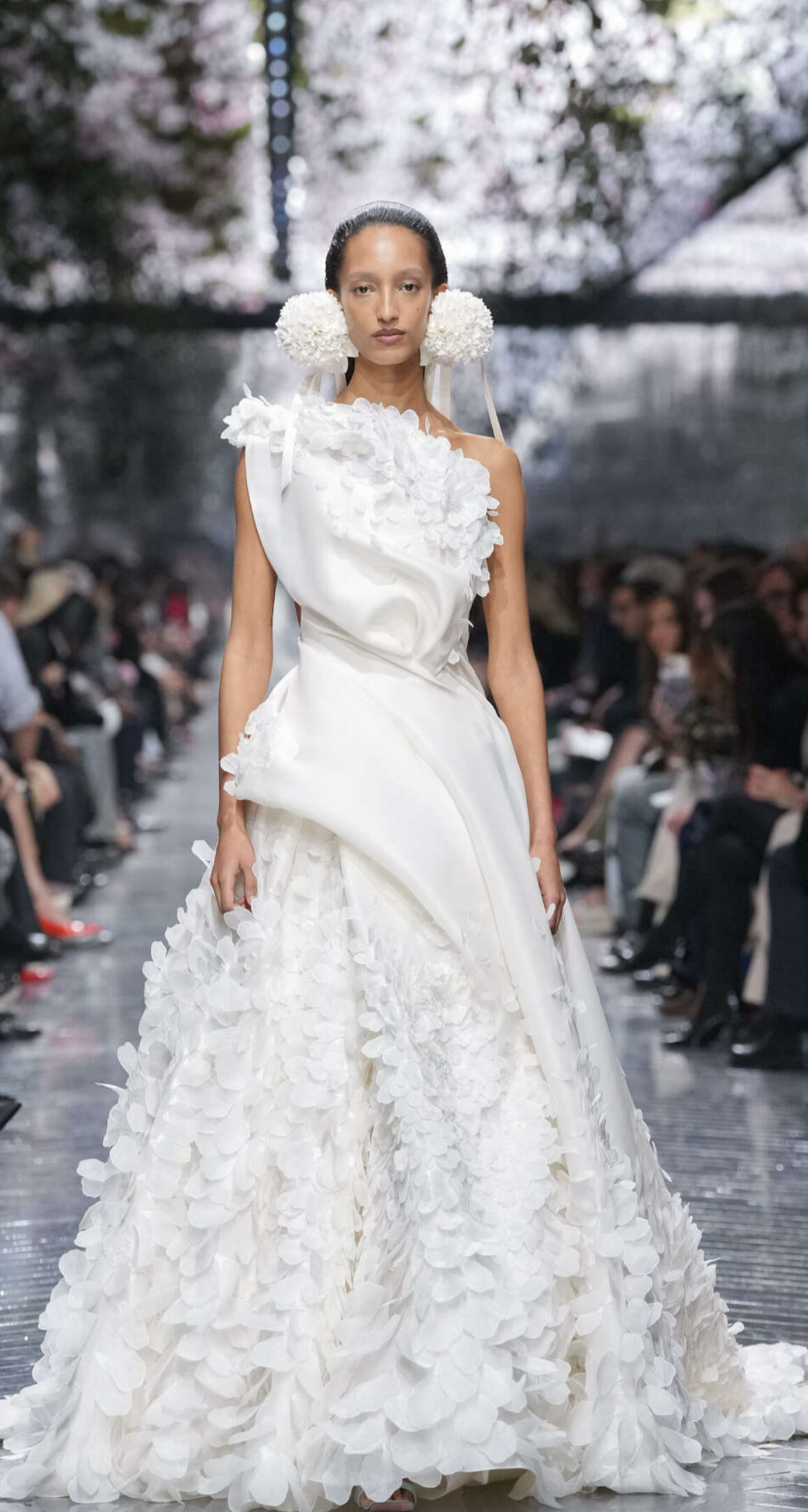
White at the close of a couture show is rarely incidental; it signals ceremony, resolution, a distillation of the idea.
The skirt is neither lace nor conventional embroidery but a surface built from hundreds of individually cut, petal-like elements layered over a base, couture labor at an extreme level. This is not fabric with texture but texture constructed from units, moving almost organically, as if the garment carries its own atmosphere.
The forms read as abstracted, enlarged petals, less botanical than structural, closer to a field in motion than ornament. Dior spoke of designing women like flowers; here that notion is pushed to couture scale.
The figure reads as ceremonial, removed from narrative, functioning as the embodiment of the collection’s idea of femininity.
What emerges from Dior Spring Summer 2026 Haute Couture is not a revival of Dior as image, but a restoration of Dior as idea.
Jonathan Anderson works within the house language, where femininity is constructed through silhouette, surface, and presence, bringing back the defined waist, the floral codes, and the woman as a composed figure, not as nostalgia but as structure.
His abstraction does not disrupt the heritage; it refines it, translating Dior’s romantic foundations into contemporary form, where garments are treated as objects and surface is built rather than applied.
The result is a woman shaped to occupy space again, and a house that feels adored not through decoration, but through discipline, authority, and the clarity of its own language.
