The Hermès Men’s Winter 2026 Show and the Gap Between Luxury Literacy and Social Media Interpretation
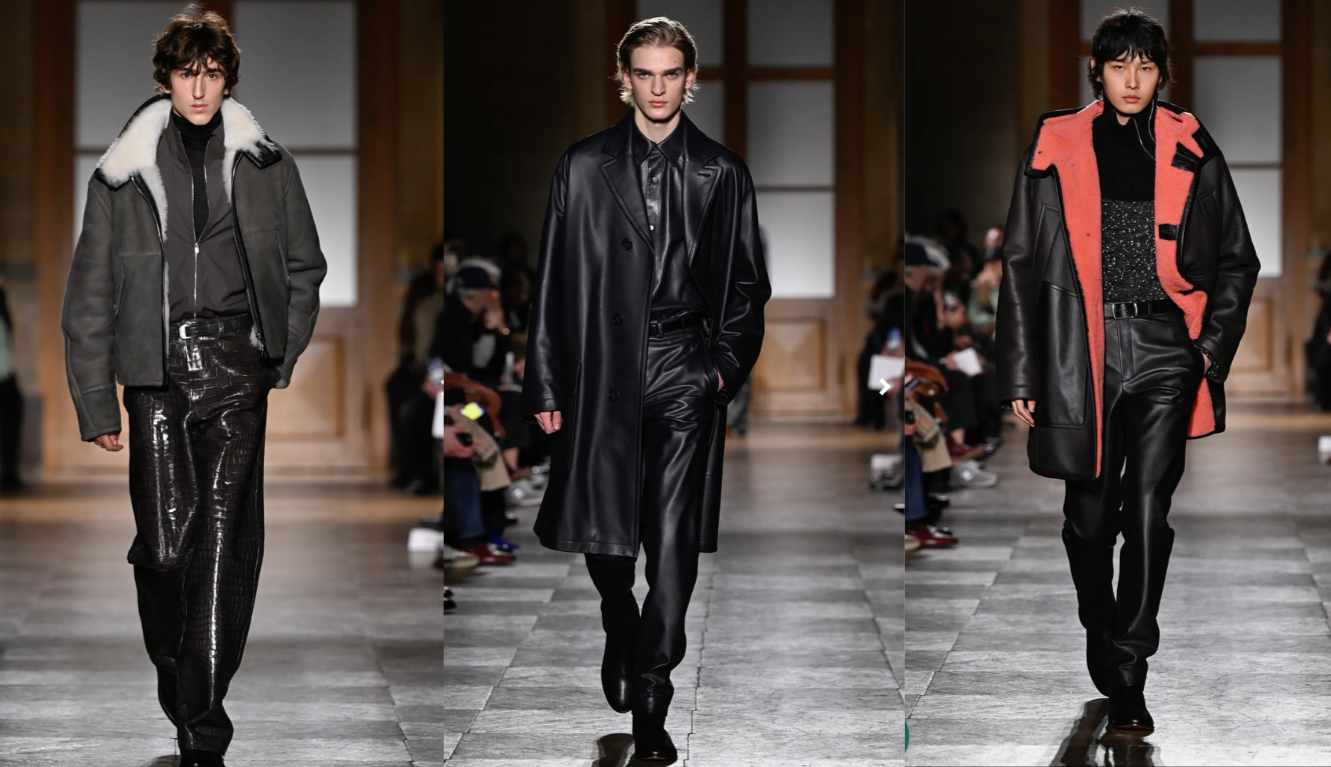
Véronique Nichanian closed a 37-year chapter with clarity, reaffirming that Hermès builds on time rather than trends, shaping garments intended to live for decades, not seasons.
Her tenure unfolded apart from an industry increasingly organized around acceleration, constant drops, and compressed creative cycles, where production rhythm often overtakes material development.
After the men’s show, social media quickly absorbed the collection into familiar language, labeling it “quiet luxury” and aligning it with the circulating “old money” aesthetic on TikTok.
That response, however, reveals a gap in understanding.
As Nichanian noted in her Business of Fashion interview, “If you only see it on the runway, if you don’t come and touch it and look at it, you don’t understand exactly the work.”
Her remark points to something structural.
Luxury cannot be fully interpreted through images. It is built through material presence, construction, and tactile intelligence, dimensions digital culture cannot transmit.
So let’s read the collection through material, not runway images.
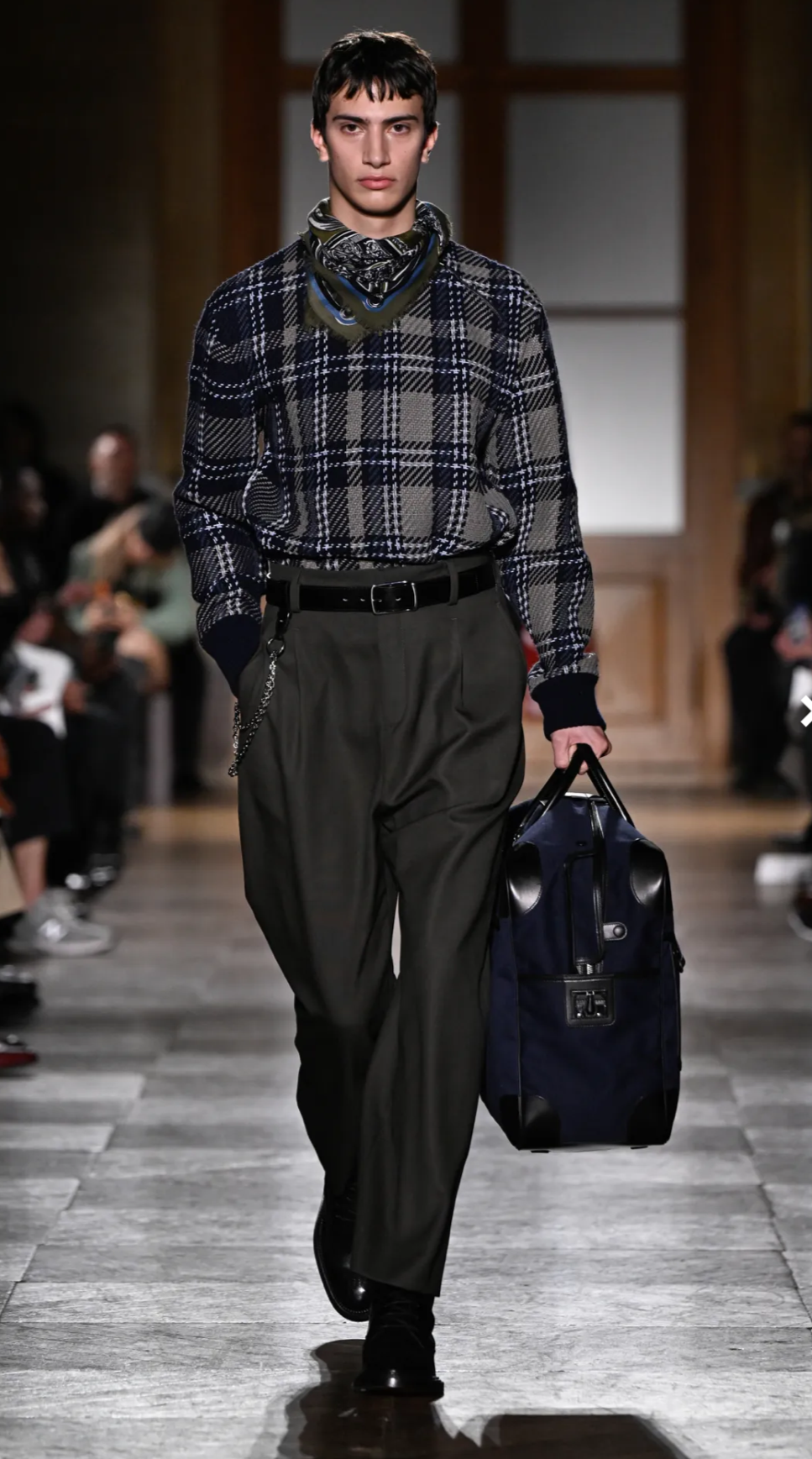
The fabric reads as washed, handled, and stabilized. It is built to live, not to be photographed once.
The trousers fall heavy and straight. The wool has weight.
The crease remains soft because the cut follows gravity.
The garment is designed for movement across a full day, not stillness.
Poor tailoring collapses or over-creases.
This structure holds itself.
What is often labeled “quiet luxury” online focuses on signaling and visual codes.
This operates differently.
The focus here is material intelligence, how cloth behaves in wear, how time passes through fiber, how structure responds to the body.
That language is not meant to be universally legible.
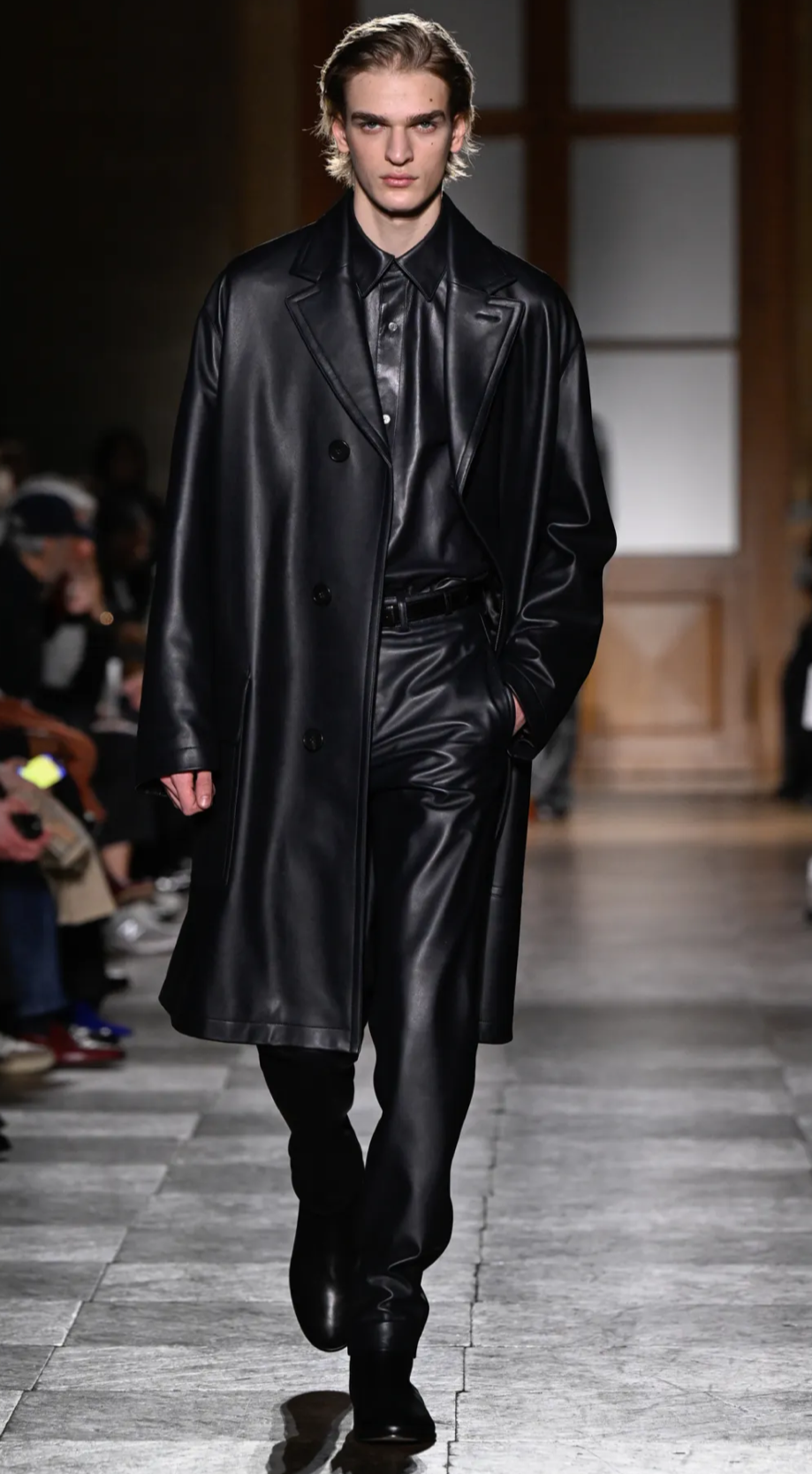
At first glance, the look appears simple.
Black leather. Classical proportions.
Then the material begins to speak.
The surface does not sparkle or reflect sharply.
Light is absorbed rather than bounced back.
There is no synthetic glare, no visual stiffness.
That signals a full-bodied leather, worked to achieve suppleness without losing structural integrity.
It carries the ease of something lived with, yet never worn down.
Observe how the coat falls from the shoulder.
It neither stands away from the body nor collapses into it.
The line follows the torso with controlled fluidity.
This is softness achieved through process, not through thinning.
That distinction defines the difference between material quality and material compromise.
Inferior leather cracks.
Competent leather creases.
Exceptional leather moves.
Here, the fold is smooth because the material has internal flexibility while maintaining density.
The luxury lies in the balance. Comfort without loss of precision. Ease without loss of authority.
That is what makes it valuable.
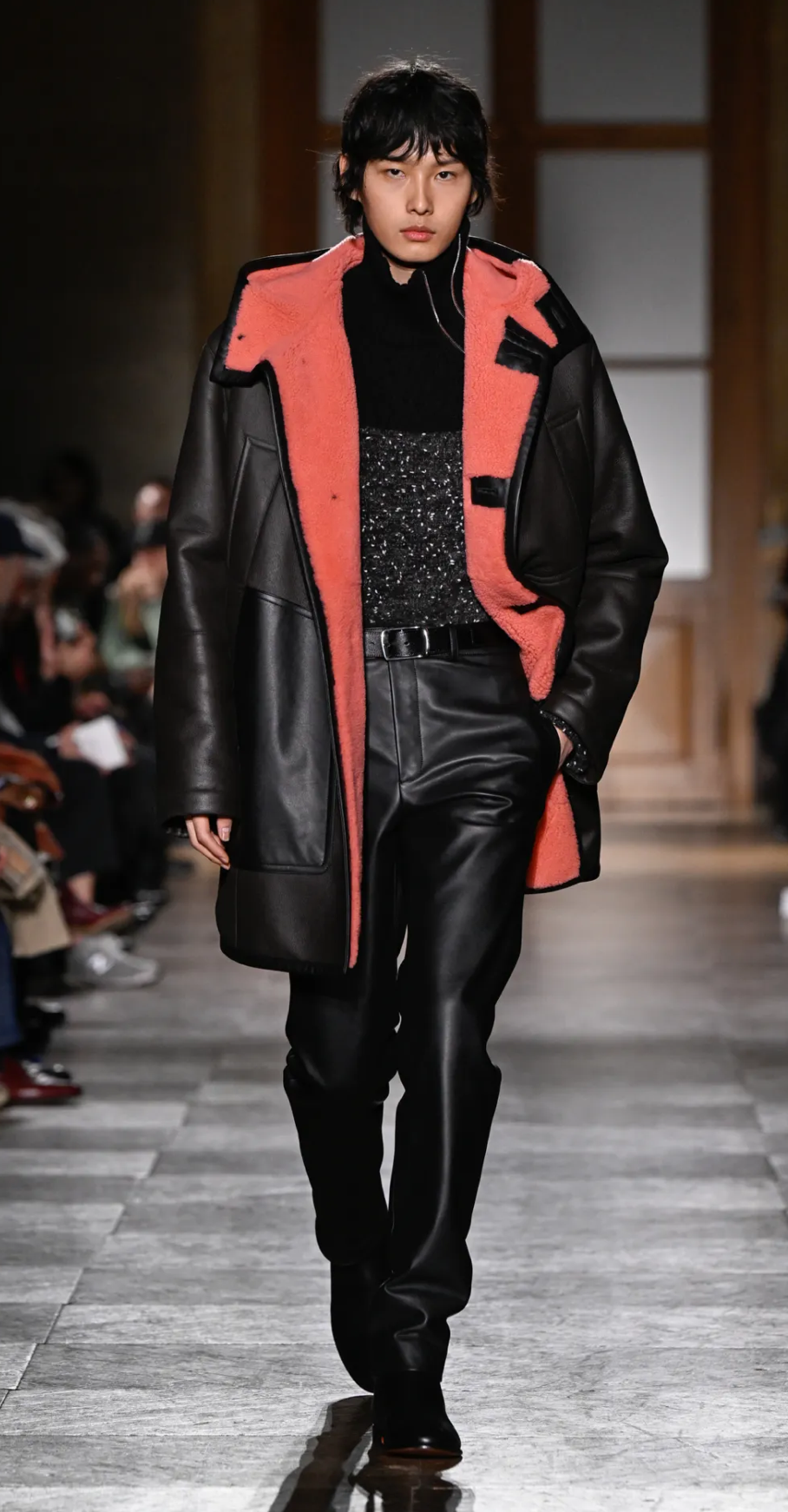
Online, the look will be judged through color contrast.
But the real dialogue here is between density and softness.
The outer shell is substantial, not glossy.
It does not perform under lighting.
The material bends gradually at the elbow and shoulder, resisting sharp creasing.
That behavior signals leather designed to age, not to impress in the moment.
Observe the hem and the shoulders.
They do not project outward with stiffness.
The structure holds, yet the line remains relaxed.
The comfort is visible.
The softness is perceptible even through the image.
You already understand the garment will improve with time rather than deteriorate.
This is material functioning as language.
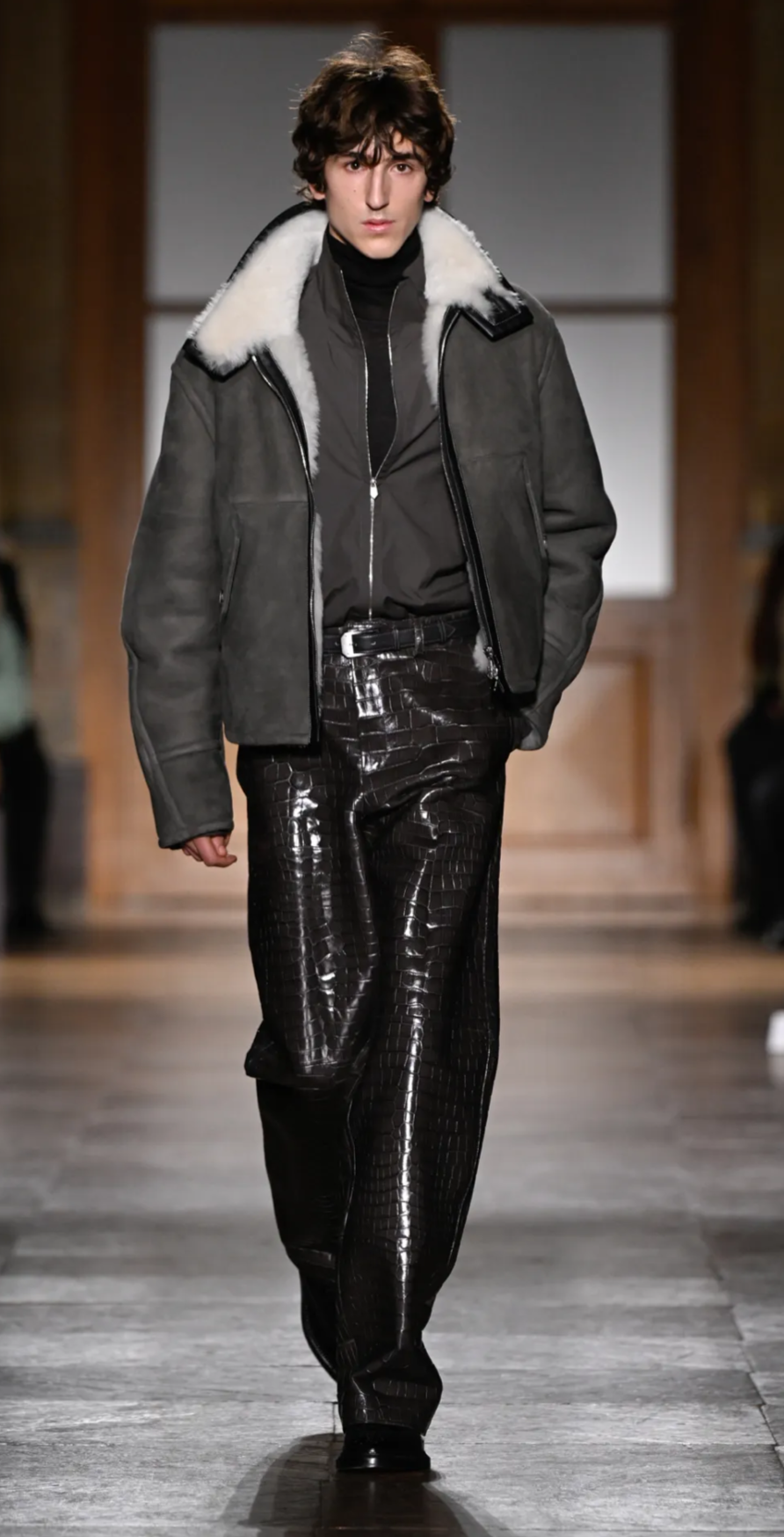
The jacket’s surface is matte and dense rather than glossy. The body maintains volume without stiffness.
At the shoulder and sleeve, the material does not form sharp creases with movement.
Visually, this indicates a skin with substance, finished to yield gradually rather than react abruptly.
Inferior leather snaps back or wrinkles harshly.
This surface absorbs motion.
The shearling is short, compact, and even, selected for longevity rather than visual drama.
Now consider the crocodile-effect leather trousers.
The sheen is deep but not mirror-like. Embossed leather often appears rigid or synthetic. Here, the pattern moves with the leg, which suggests the base leather was of high quality before embossing. The material retains thickness while remaining supple.
Nothing in this construction seeks visual signaling.
It reads as inevitable.
Each material bends slowly, holds its line, and improves through use and time.
This is what Véronique Nichanian meant when material becomes the vocabulary, not color.
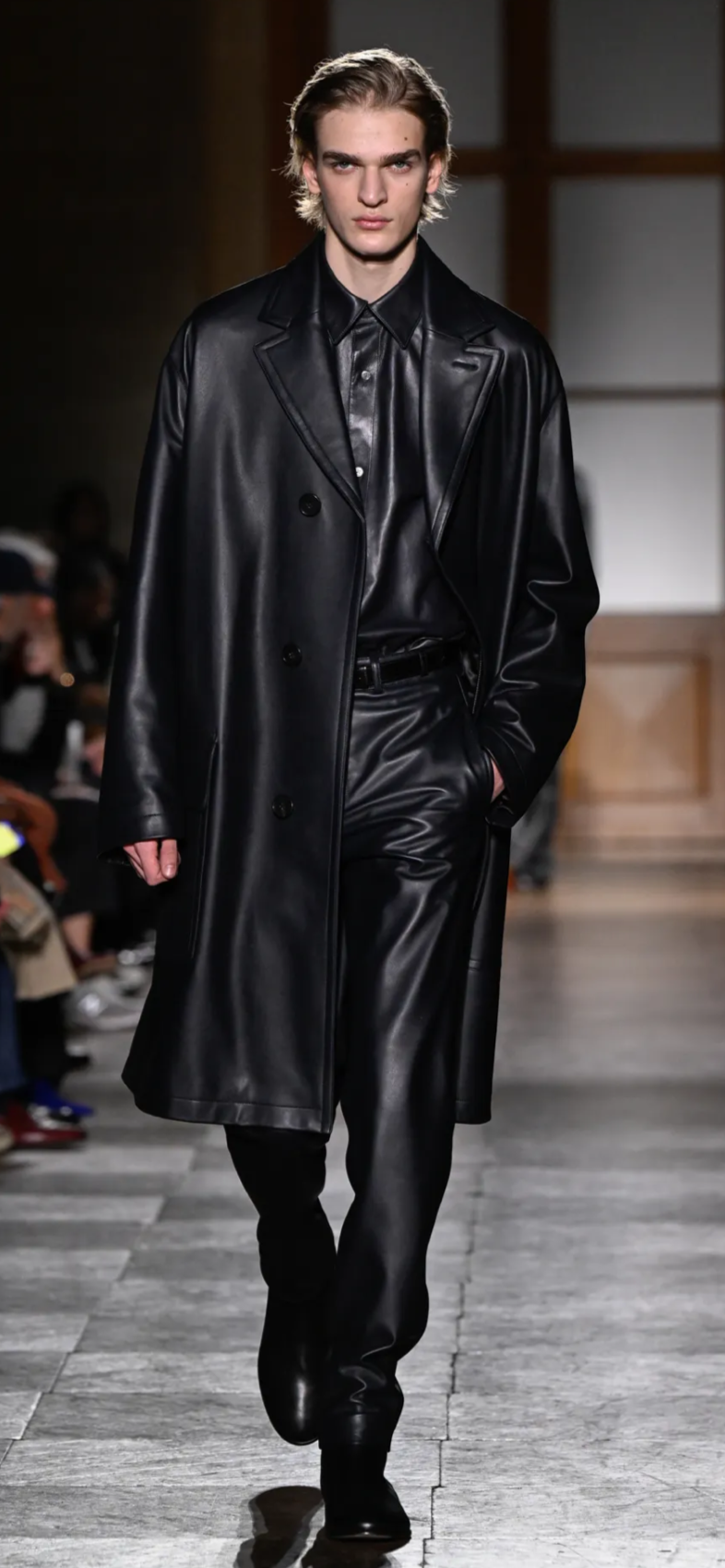
This version leans toward suppleness rather than architecture.
Anyone familiar with the Hermès women’s spring summer 2026 show will recognize the house’s command of that buttery leather sensation, a tactile quality so pronounced it borders on synesthesia.
You see it in the way the lapel folds rather than stands. In the soft rounding of the shoulder. In how the coat follows the torso instead of resting on top of it.
This is leather designed to mature with wear.
It is the kind of coat that moves from work to travel to evening over years, improving rather than declining.
The emphasis is on use. On how material behaves in life, not just under lighting.
You do not need to be told it is expensive. The eye registers weight, density, fall, and recovery before language appears.
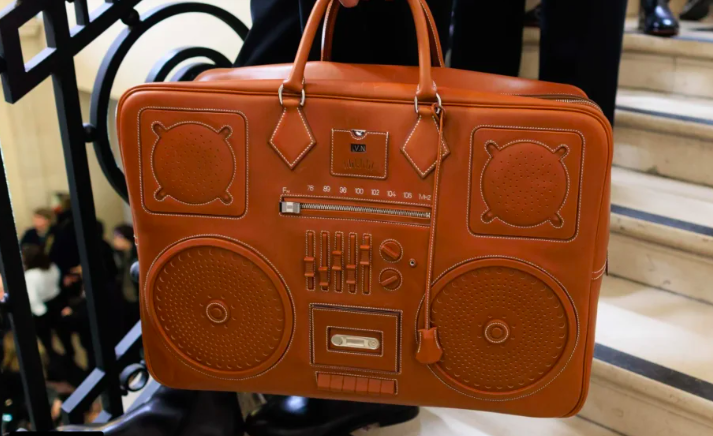
At first, it feels light. Almost familiar. Like something you’ve seen before.
Then you look longer.
The weight of it is not in the shape. It’s in the material and the way it’s built.
The bag is executed in Box calfskin, a choice that carries more meaning than any surface detail. Box calf is smooth, dense, lightly glossy, and technically demanding. It reveals imprecision immediately, which is why its use signals confidence in execution.
When Box calf appears on a runway, the message is directed at material literacy rather than spectacle.
The silhouette references the Plume Fourre-Tout, a classic Hermès travel form. That lineage positions the bag within use, not display.
It quietly asks whether quality can be recognized without instruction.
An understanding of how Box calf behaves, why the structure remains restrained, and why the references stay internal rather than declarative allows the construction to be fully read. Without that knowledge, the object still performs its function with precision.
Véronique Nichanian’s work at Hermès is a reminder that in true luxury houses, the real language is material.
When the eye is trained only for style, the work disappears. When it is trained for material, construction, and behavior over time, the whole language opens.
