Jonathan Anderson’s Dior Fall–Winter 2026–2027 Couture Collection Reveals How the House Rebuilds Authority Before Revenue
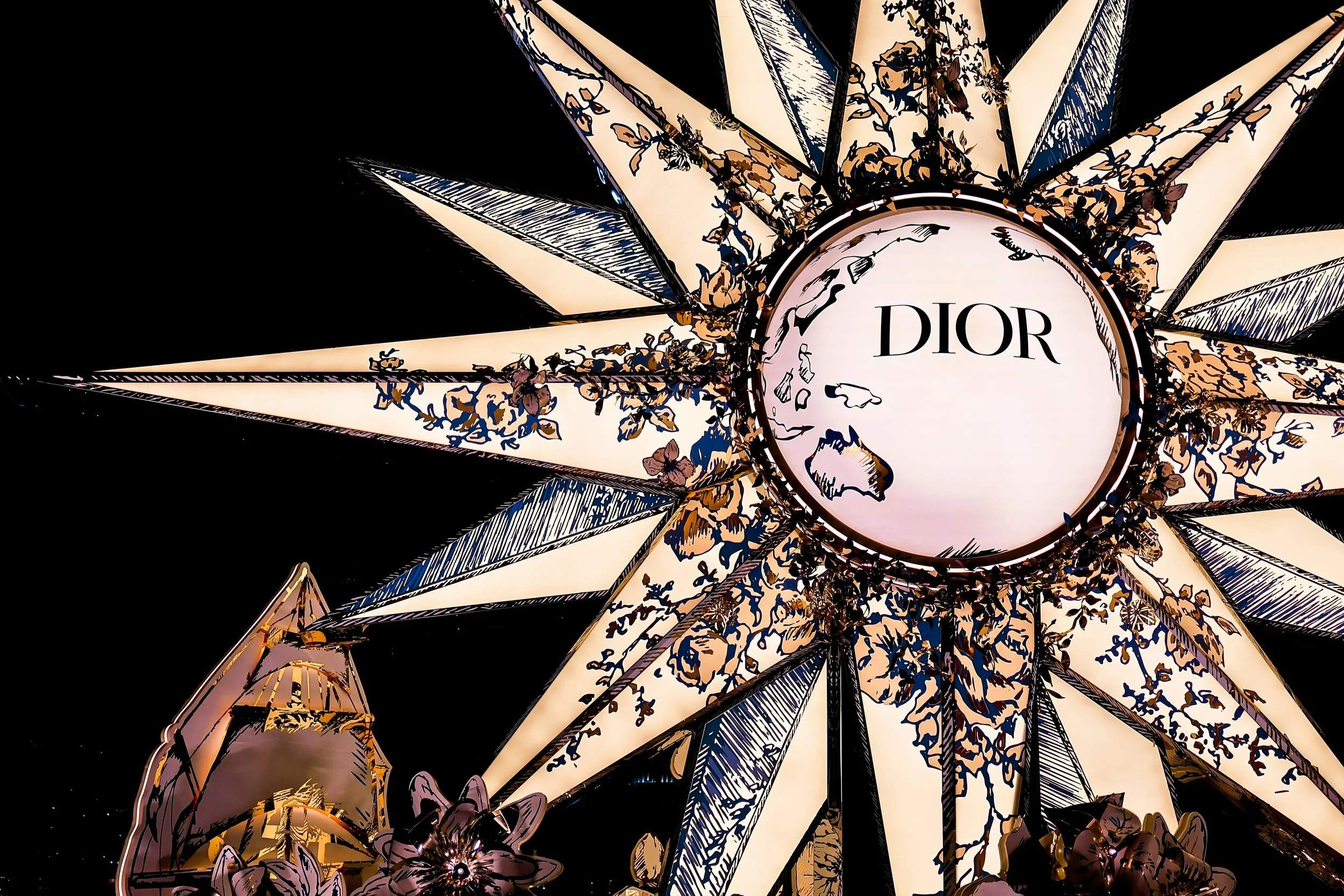
Haute couture is where a creative director's point of view is tested in its purest form because almost none of the usual commercial constraints apply.
Couture exists to answer only one question: Does the creative director understand the house deeply enough to extend its identity rather than merely imitate its codes?
Jonathan Anderson arrived at Dior during a difficult period for the wider luxury market and for LVMH's fashion division. His second haute couture collection for the house revealed one of luxury's most overlooked strategic truths.
€37.8 billion
LVMH Fashion & Leather Goods revenue, 2025
At a time when luxury sales are declining, LVMH's Fashion and Leather Goods division generated €37.8 billion in revenue in 2025. That represented a 5 percent organic decline and an 8 percent decline on a reported basis.
Ultra-luxury heritage houses such as Dior do not begin their recovery by chasing customers or immediate revenue. They begin by restoring the authority that makes their products desirable in the first place, because their products sell through authority, desirability, and cultural legitimacy.
This is precisely where couture comes in, and why a creative director devotes so much creativity, labour, and institutional attention to haute couture when it is one of the house's least commercially scalable divisions.
Because couture is not simply a product category.
It is the authority engine behind the rest of the business.
The Product Is Not the Only Thing Being Sold
Dior's commercially scalable categories include handbags, accessories, ready-to-wear, and fragrance, which reach a far broader customer base than haute couture.
But those categories only command luxury pricing if the house possesses authority.
That authority comes from craft depth, cultural weight, historical legitimacy, creative leadership, and the belief that the brand operates at a level ordinary fashion companies cannot reach.
Couture is the machine that produces that authority.
It is Dior's proof of work.
A customer buying a Lady Dior bag may never enter the atelier or witness the hours of embroidery, draping, fitting, and construction behind a couture gown. But she has absorbed, through imagery, media coverage, exhibitions, celebrity dressing, and institutional storytelling, that Dior is capable of producing work at that level.
The handbag borrows the credibility that couture has earned.
The couture collection itself is therefore not the only product being sold.
It is the credentialing event that allows everything downstream to be priced as though it shares the same creative and technical DNA.
Why Turning Couture Into a Public Cultural Event Matters
A closed couture show, seen by editors, clients, celebrities, and invited guests, generates prestige.
But that prestige remains largely contained within the fashion industry.
By turning the presentation into a free public exhibition at the Musée Rodin, Dior converts private prestige into public cultural authority.
This produces two important effects.
First, it makes Dior's authority legible to people who will never purchase couture but may buy fragrance, cosmetics, accessories, or handbags.
A visitor walking through the exhibition does not need to understand atelier construction or hand-embroidery techniques. The broader message is absorbed more intuitively:
Dior is not merely a fashion brand.
Dior belongs within the world of serious art, craft, and cultural institutions.
That association can later influence how the same visitor perceives a Dior fragrance or handbag.
Second, the exhibition reinforces Dior's authority through association with an established cultural institution.
A fashion house asserting its own importance is marketing.
Placing its work inside the Musée Rodin, alongside sculptures by Lynda Benglis, creates a different kind of signal: one supported by institutional cultural authority.
That association strengthens the couture collection's credibility and extends into Dior's wider commercial product system.
This is how cultural positioning
reinforces brand authority.
Anderson Is Turning the Strategy Into a System
Anderson's approach is particularly effective because he is making it structural rather than seasonal.
Two couture seasons into his tenure, Dior has presented two artist pairings: Magdalene Odundo for Anderson’s Spring–Summer 2026 haute couture debut in January, and Lynda Benglis for his Fall–Winter 2026–2027 haute couture collection in July. .
That repetition suggests a system rather than a one-off activation.
It gives Anderson's Dior a recognisable worldview and makes the artistic dialogue part of his authorship at the house.
This is one of the most important functions of a creative director.
The job is not only to design clothes. It is to give the house a legible cultural position.
A one-off exhibition can be dismissed as a campaign idea.
A recurring curatorial structure begins to look like an institutional point of view.
Anderson Is Reactivating an Underused Part of Dior's Identity
The smartest part of the strategy is that Anderson can connect it to Dior's own history.
Before founding the fashion house, Christian Dior worked within the art world and exhibited artists including Picasso, Matisse, and Dalí.
This means Anderson is not inventing an entirely new identity for Dior. He is bringing a historically established but less visible part of the house's identity back to the foreground.
That is strategically stronger than presenting the artistic direction as a personal interest imposed by a new creative director.
It allows Anderson to position the change as continuity rather than rupture.
This matters because every incoming creative director at a heritage house faces the same tension.
Change too little, and the work appears repetitive.
Change too much, and the designer is accused of misunderstanding the house.
By reconnecting Dior with its own art-world history, Anderson can introduce a new cultural system while still grounding it in the founder's identity.
It is continuity expressed through innovation.
Couture as a Belief-Generation System
Anderson's museum-exhibition model is ultimately a repeatable belief-generation system.
Each season can produce a new press cycle, a new cultural association, and a new signal that Dior belongs within a world larger than fashion commerce.
This matters because authority in luxury has to be continuously reproduced.
Heritage alone is not enough.
A house cannot rely indefinitely on what it represented decades ago. It must keep providing contemporary evidence that its history, craft, and cultural position remain active.
Couture provides that evidence.
The museum exhibition amplifies it.
The commercial categories benefit from it.
This is the mechanism behind Dior's strategy.
The couture collection may not be the product that generates the most revenue.
It produces the authority that allows the rest of the house to generate revenue at luxury prices.
That is the strategic truth Anderson's second haute couture collection revealed.
Luxury recovery does not begin when a house starts selling more.
It begins when the house becomes believable again.
