What Kering’s AGM Actually Teaches Next-Generation Luxury Builders
Kering’s latest Annual General Meeting was not only a recovery update. It was a public lesson in what happens when luxury scale grows faster than the desire meant to sustain it.
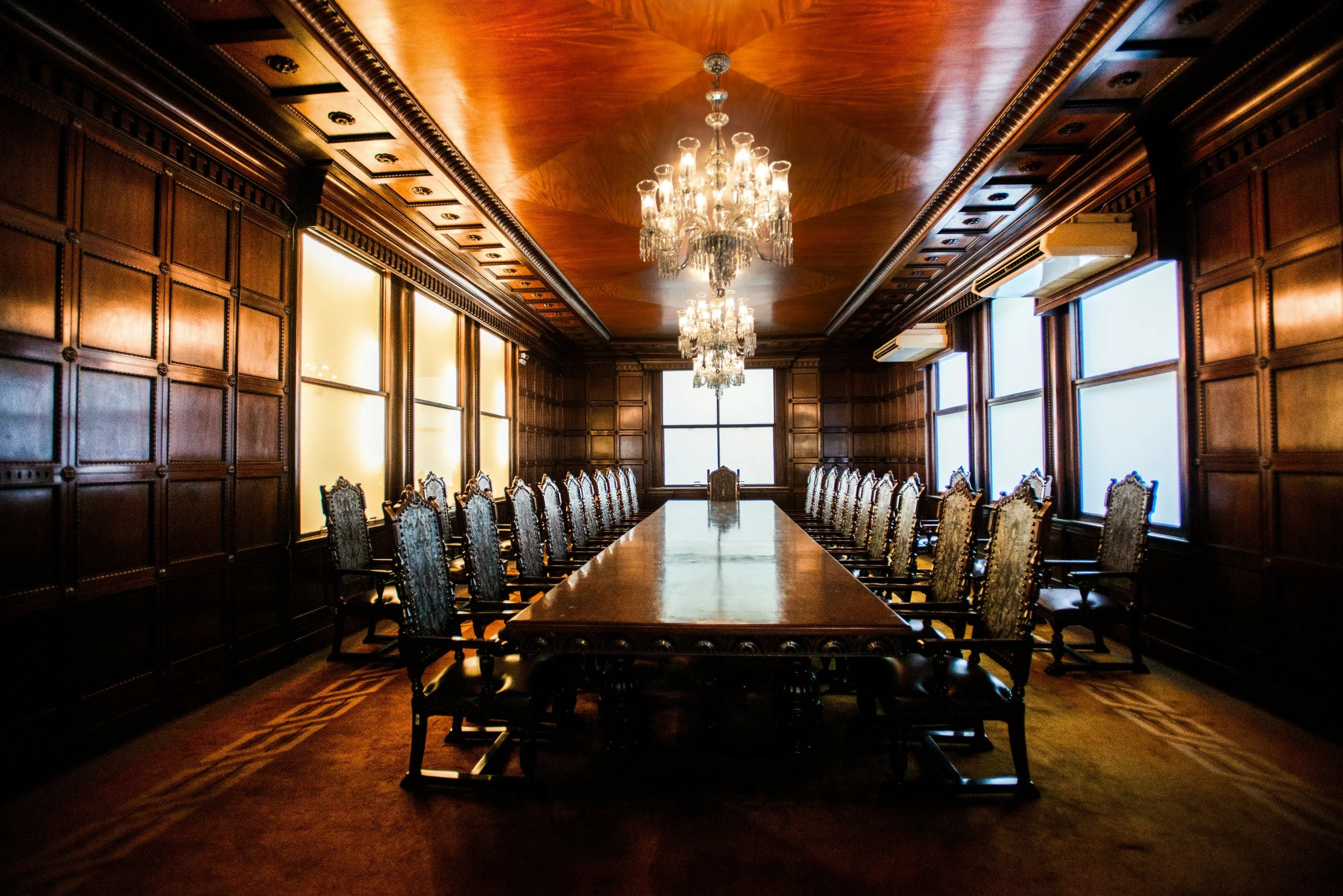
There is something instructive about watching the world’s second largest luxury group stand in front of its shareholders and explain, politely, that it lost the thread.
Kering’s Annual General Meeting took place in Paris on May 28, 2026. CEO Luca de Meo delivered what was described as a 360-degree strategic road map. The language was confident. The numbers told a different story.
Revenue in 2025 came in at 14.7 billion euros. The group employs 44,000 people. These are not the numbers of a company in crisis in the conventional sense. They are the numbers of a company that built an enormous machine and then watched the machine outrun the meaning that was supposed to power it.
Gucci is the most visible expression of the problem. But the meeting was not only about Gucci. It was about what happens when a luxury group has to rebuild the systems that protect desire after years of expansion, visibility, and financial extraction.
When Revenue Becomes the Product
Gucci was Kering’s primary growth engine for years. So was China. Both stalled at roughly the same time, and the margin collapse followed. What is worth understanding is that this is not a coincidence of timing. It is a pattern.
When a luxury house becomes a revenue engine, the decisions that protect brand desire start losing arguments to the decisions that protect quarterly performance. Distribution widens. Product lines multiply. The logo appears in more places. The customer who made the brand desirable in the first place starts to feel crowded out.
This is not a Gucci-specific failure. It is the structural tension every luxury brand lives inside, at every scale.
The Store Is Doing the Work the Strategy Should Have Done
De Meo is now overseeing the renovation of more than two-thirds of Gucci’s store network. Layouts are being reconfigured. The product offer is being simplified. Secure fine jewelry departments are being built into the new store architecture.
Read that sequence carefully. It is a brand attempting to use physical space to rebuild the psychological distance it lost through overexposure. The store is doing the work the brand strategy should have done earlier.
The Lag Nobody Talks About
The choices that eroded Gucci’s desirability were not made in 2024. They were made years earlier, during the growth phase, when the numbers were good and the warning signs looked like strength. The margin collapse came later, after the compounding.
This is the nature of brand equity as an asset. It does not depreciate visibly. It erodes quietly, and then suddenly.
The moment you scale faster than your brand meaning can travel, you are already in recovery mode. The renovation is always more expensive than the protection would have been.
For an independent luxury founder, that is not a cautionary tale about Gucci. It is a structural law. One that applies at every revenue level, including yours.
Continues in Part II: Desirability as a Line Item
Desirability as a Line Item
Kering has restructured executive pay to track brand desirability. When desire becomes a dashboard metric, it usually means desire has already started to leave the room.
The most significant thing said at Kering’s AGM was also the least reported. Executive compensation has been restructured to link pay to brand desirability measures, alongside stock market performance.
This is the moment a luxury conglomerate formally admitted that desirability is not a feeling. It is a metric. It can be tracked, benchmarked, and held against a salary.
The measurement is the symptom, not the cure.
Desire in luxury is created through absence as much as presence. Through selectivity. Through the consumer believing that the brand exists slightly beyond their reach, even when they can afford it. The moment a company has to measure desirability on a dashboard, it is usually because desirability has already started to leave the room.
What the Jewelry Pivot Actually Signals
De Meo was explicit at the AGM: jewelry is resilient, emotionally powerful, and under-exploited across the group. Kering owns Boucheron, Pomellato, DoDo and Qeelin. The statement is a portfolio strategy. But it also decodes into something deeper.
Luxury groups pivot toward jewelry during periods of brand softness for a structural reason. Jewelry has no trend cycle. It carries no logo saturation risk. It does not go out of season. Its emotional register is entirely different from ready-to-wear.
A piece of jewelry is not purchased because it is fashionable. It is purchased because it means something to the person wearing it, or the person giving it. That emotional permanence is exactly what Kering’s core houses lost during the volume years. Jewelry does not require you to be everywhere. It requires you to be worth something.
The pivot toward fine jewelry inside Gucci’s renovated stores is not decoration. It is a deliberate move toward a category that is structurally harder to dilute. When brand codes have been overexposed at every other price point and product category, jewelry is the room you can still close the door on.
Gucci, F1, and the Question of Earned Relevance
De Meo confirmed at the AGM that Gucci has signed as title partner of the Alpine Formula 1 team. From the 2027 season, Alpine will compete as the Gucci Racing Alpine Formula 1 Team. De Meo came from Renault, which owns Alpine. The connection is not incidental.
There is a version of this partnership that works. There is also a version where a house that spent a decade overexposed adds another high-visibility surface to an already crowded presence, and calls it cultural relevance. Hermès does not do Formula 1. That is not an accident.
The difference between association and contamination is whether the brand has enough protected desire left for the partnership to feel earned rather than desperate. For a founder watching this: the question is not whether F1 is prestigious. It is whether Gucci, at this particular moment in its brand arc, has the desirability surplus to lend meaning to a sponsorship rather than borrow credibility from one.
The Founder Translation
You will know you are protecting desire when you are turning things down. When you are choosing not to stock somewhere. Not to produce another colourway. Not to take the partnership that pays well but sits awkwardly against your brand architecture.
Kering built its desirability problem incrementally, one reasonable decision at a time. Each individual choice had a rational justification. The accumulated effect was the erosion of the very thing that made the houses worth buying from.
Brand equity does not depreciate visibly. It erodes quietly, and then suddenly. Kering is learning this in public. You have the advantage of learning it now, at the scale where the corrections are still cheap.
Continues in Part III: The Renovation Is Always More Expensive
The Renovation Is Always More Expensive
The structural lesson every independent founder should take from Kering’s public rebuilding: the protection is cheap. The recovery is not.
Kering sold its beauty division to L’Oréal as part of a 4 billion euro deal. It is restructuring executive compensation around desirability metrics. It is renovating more than two-thirds of Gucci’s global store network. It is pivoting toward jewelry, wellness and longevity as its next brand territories.
What does a group do when it needs to rebuild meaning at scale? It strips back. It simplifies. It goes deeper into the categories that are structurally harder to dilute. It closes the doors it left open for too long.
These are not growth moves. They are protection moves that should have happened earlier, now costing significantly more to execute.
What the Beauty Exit Actually Tells You
Kering Beauté was sold to L’Oréal. Shareholders received an exceptional cash dividend linked to that disposal. The transaction is framed as financial. But what it reveals is a portfolio philosophy.
Kering is choosing to exit a category where L’Oréal will always out-execute it, and redirect that capital toward territories where luxury houses have a structural advantage: fine jewelry, wellness experiences, longevity. Categories where intimacy and scarcity are still possible.
When a luxury group divests beauty and pivots to wellness, it is choosing a different kind of closeness with its customer. Not mass distribution. Considered access.
The hospitality question raised at the AGM points in the same direction. A Mandarin Oriental group CEO was appointed to Kering’s board. Shareholders immediately asked whether Gucci hotels were coming. De Meo deflected toward wellness and longevity instead. But the question itself is the data point. When a brand has been diluted enough through product, the market starts asking it to become a total world rather than a house. Because a world is harder to saturate than a product line.
Three Structural Laws from the Kering AGM
01. Brand equity erodes quietly, then suddenly. The decisions that damaged Gucci’s desirability were not made in 2024. They were made years earlier, during the growth phase, when the numbers looked like validation. The margin collapse was the delayed receipt. You will not see the damage as it is happening. You will see it after compounding.
02. Desirability cannot be recovered at the same speed it was lost. De Meo is targeting more than doubled profitability by 2030. That is a four-year runway to rebuild what was eroded over a decade of distribution decisions. The asymmetry is always this severe. Dilution happens fast. Recovery is architectural and slow.
03. The protection is always cheaper than the renovation. Renovating two-thirds of a global store network. Restructuring executive compensation. Exiting an entire product category. Rebuilding brand codes from the inside out. Every one of these is the expensive version of a decision that could have been made earlier, smaller, and for free.
What This Means for a Founder Building Now
Kering is not a cautionary tale. It is a case study in the lag between brand decisions and brand consequences. And that lag is the thing that makes it genuinely dangerous, because by the time the consequences appear, the decisions that caused them feel like ancient history.
For an independent luxury founder, the AGM is worth reading not for what de Meo announced, but for what it confirms at every scale.
You will know you are protecting desire when you are turning things down. When you are choosing not to stock somewhere. Not to produce another colourway. Not to take the partnership that pays well but sits awkwardly against your brand architecture. The selectivity that feels like lost revenue today is the margin you are protecting for later.
The moment you scale faster than your brand meaning can travel, you are already in recovery mode. Kering is doing the renovation now. Publicly. At this scale. You do not have to wait that long to understand the lesson.
All figures sourced from the Kering Annual General Meeting press release, May 28, 2026, and WWD reporting from the same date. Operating margin decline from 27% to 11% covers 2022 to 2025 as reported by WWD.
