Gucci’s 2026 Reset: La Famiglia and the Rise of Material-Led Luxury
Luxury in 2026 is no longer measured by volume, virality, or shock value.
It is measured by something far quieter, whether a piece looks believable enough to become vintage later.
That shift matters because audience perception has fundamentally changed. Gen Z and younger luxury buyers are no longer emotionally loyal to “newness.” They are loyal to objects that feel archived, durable, and culturally grounded. This is why vintage shopping continues to rise, why resale platforms keep expanding, and why brands are cycling through creative directors at record speed — everyone is chasing relevance in a market that no longer rewards noise.
Against this backdrop, Gucci’s Spring/Summer 2026 campaign La Famiglia does something most brands fail to do: it stops trying to convince and starts proving.
Not through slogans.
Not through spectacle.
But through materials.
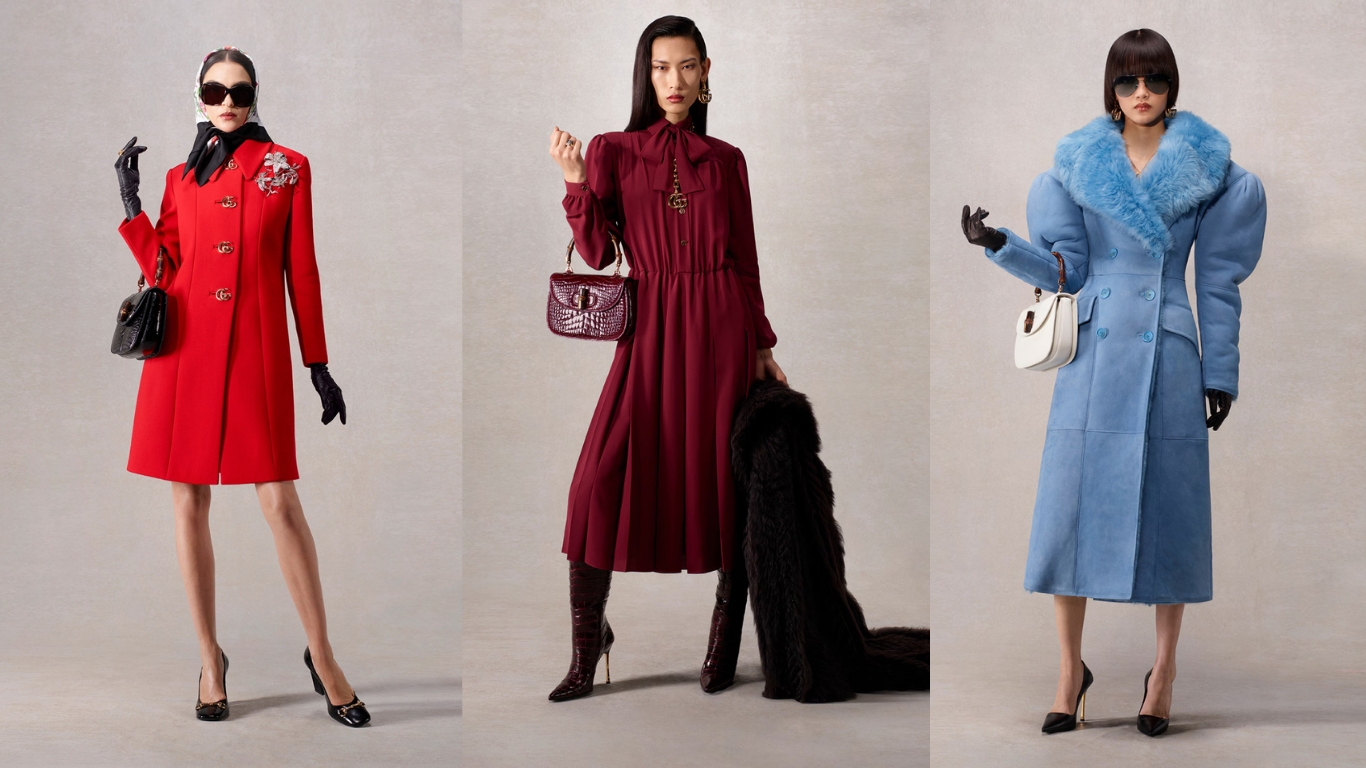
La Famiglia is not nostalgia. It is archive energy, a deliberate aesthetic language designed to age well rather than trend fast.
Modern consumers, trained by resale culture and vintage discovery, subconsciously evaluate luxury through three filters:
Weight
Heavy textiles, real shearling, coated canvases, dense leathers — materials that signal cost, time, and permanence.Structure
Shoulder architecture, tailoring discipline, controlled silhouettes, and hardware that holds shape over years.Recognizable Codes
House signatures (GG canvas, Dionysus hardware, tiger motifs) used with restraint not logo spam.
This is why La Famiglia reads as “worth it.”
It is not designed to dominate a feed, it is designed to survive ownership.
Material Authority: When Fabric Does the Persuasion
1. The “La Sciura” Light-Blue Shearling Coat
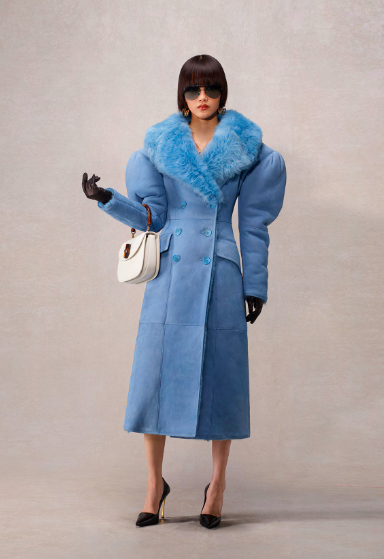
This coat communicates authority through restraint rather than display.
Its impact comes from the tension between softness and control, where volume is disciplined instead of exaggerated.
Psychologically, this signals confidence because nothing is trying to persuade and nothing is asking for approval.
In 2026, clients respond to materials that imply cost and discernment without explanation, because overt signaling now reads as insecurity.
The piece does not perform luxury. It assumes it, and that assumption is what gives it power.
2. Dark-Brown Chevron Shearling Coat
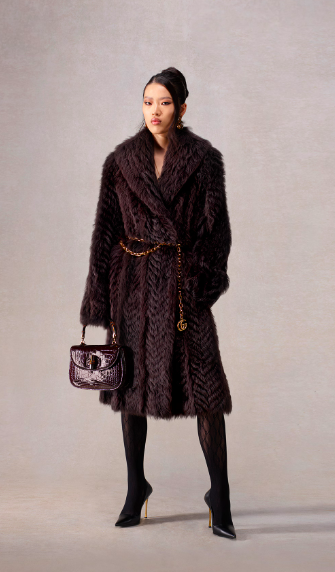
Gucci positions this piece around effort rather than effect.
Seen in looks such as Ereditiera and Milanesa, it redirects luxury away from novelty and back toward labor.
The surface communicates time spent rather than precision achieved, which is increasingly rare.
Psychologically, this signals value that cannot be accelerated, optimized, or duplicated at scale.
In 2026, human time has become one of the last credible luxury currencies, and this piece makes that visible.
3. Coated GG Canvas Coat With Dionysus Belt
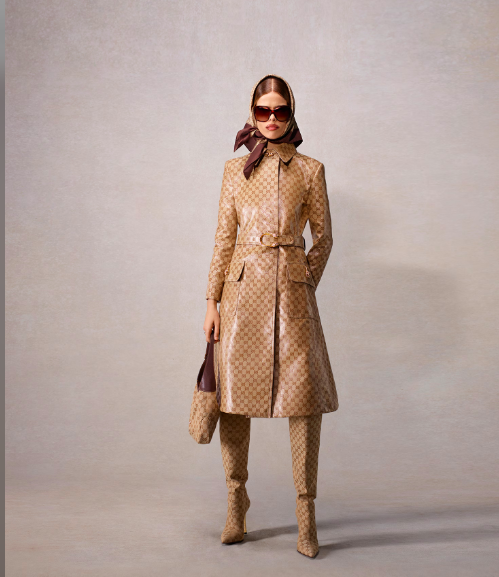
Modern Armor, Not Logo Wear
This piece demonstrates how heritage codes can be carried forward without dilution or nostalgia.
The monogram is treated as material texture rather than a graphic signal, which shifts it from branding into structure.
Psychologically, weight and hardware introduce a sense of permanence that logos alone can no longer provide.
In 2026, clients accept monograms only when they behave like construction.
This is how symbols survive, by becoming architecture rather than advertisement.
4. Black Leather Mini Skirt
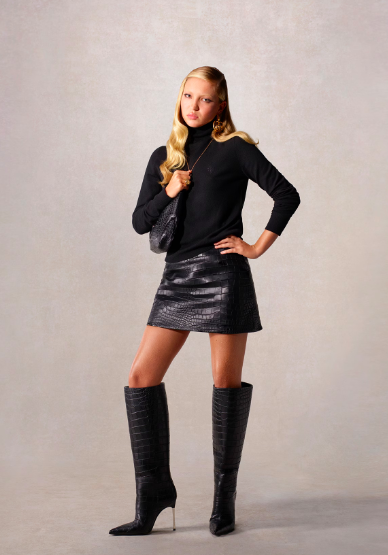
This piece is designed around leather as a long-term asset rather than a seasonal surface.
Psychologically, leather signals durability, repairability, and value retention, which aligns with how luxury clients now think when purchasing new.
The clean cut allows the material itself to age into desirability instead of being locked to a moment or trend.
In 2026, buyers read quality leather as future value, not just present aesthetics, even when resale is not the primary intention.
What holds worth now is material that improves with time, not design that expires with it.
5. Tiger Shearling Coat (“La Bomba”)
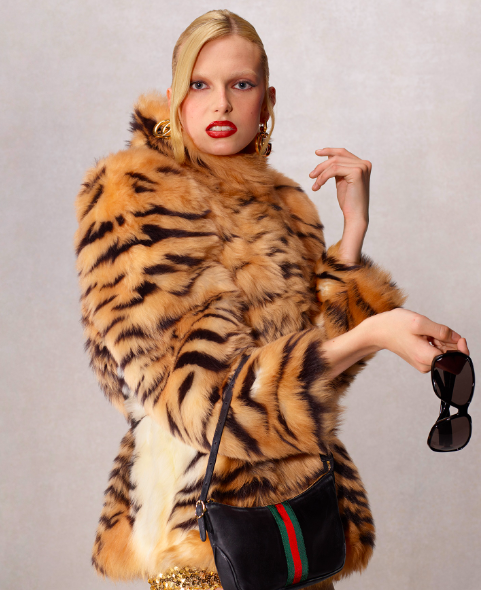
When Excess Becomes Controlled Power
This piece looks confrontational at first glance but its persuasion lies in control.
What matters here is not the tiger pattern itself, but how extreme material is disciplined by structure. The long, dense shearling carries immediate visual weight, while the tailored silhouette and cinched belt prevent it from collapsing into costume.
Psychologically, this works because the coat does something difficult: it makes abundance feel intentional.
In modern luxury, excess without control reads as insecurity. Excess with restraint reads as power.
This is why the piece still belongs inside the La Famiglia logic. It doesn’t rely on irony, nostalgia, or shock. It relies on material confidence, the idea that the wearer does not need to soften, explain, or apologise for presence.
Why This Works in 2026 (When So Many Brands Don’t)
Luxury brands today are under pressure because audiences are asking sharper questions:
Will this still look intelligent in five years?
Does this feel like something I’d hunt for in a vintage boutique?
Is the material doing something fast fashion physically cannot?
La Famiglia answers with:
Real shearling and silk linings (sensory proof)
Brass hardware and coated canvases (weight and durability)
Structured leather staples (resale logic)
This is why the vibe works.
Because the materials make it believable.
The Bigger Signal for Luxury Brands
The lesson here is not “use better fabrics.”
The lesson is this:
In 2026, materials are no longer a production detail, they are the brand message.
Marketing can attract attention.
Design can create desire.
But materials create trust.
That is why La Famiglia succeeds and why Gucci, under Demna, feels relevant without trying to feel “young.”
It doesn’t chase the future.
It builds for it.
Orisé Perspective
Modern luxury buyers think in archive logic, not trend logic
Weight, structure, and material density now outperform visual novelty
Heritage codes must function as texture, not graphics
Pieces that age well outperform pieces that perform well online
Luxury in 2026 is not louder.
It is better built.
